Baptized with Christ: Identity, Dignity, and Mission

 Baptism of Our Lord, year A
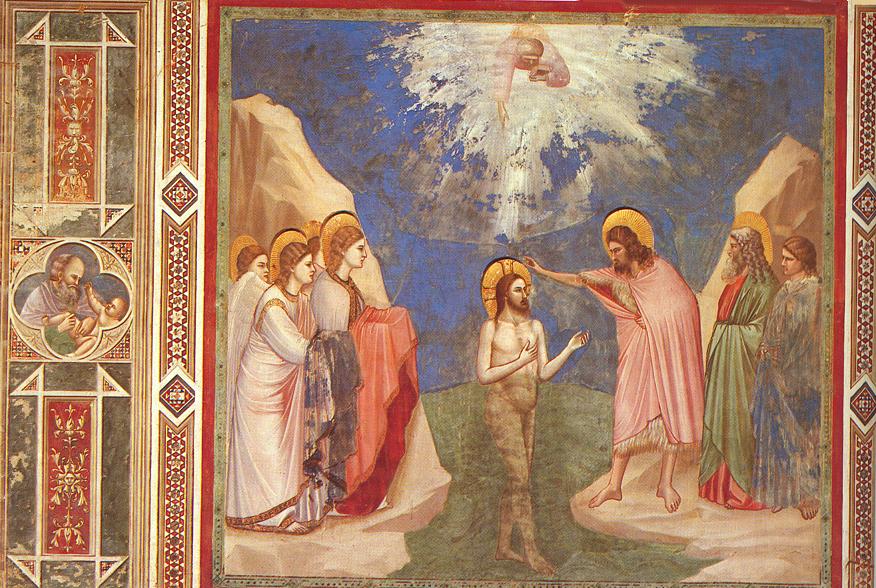
On the Feast of the Baptism of the Lord, this homily reflects on the meaning of Christian baptism through the voices of the early Church and the teaching of the Second Vatican Council. Baptism is presented as the foundation of Christian identity, naming us as sons and daughters of God, equal in dignity, and fully belonging to the Body of Christ. From this identity flows a mission, as every baptized person is sent into the world to build God’s kingdom of justice, peace, and love.


Listen to homily here:


Read homily here:


You may have noticed, either by coming to Mass or by looking at our email bulletin, that we have had a good number of baptisms in recent years. Every year around this time, we are required to make records of these things and send them to the Archbishop’s office. All of this data is then collected and forwarded to Rome.

So I had to add up the number of baptisms we had last year here at St. Peter’s, which came, if my arithmetic is correct, to sixty-seven. I was quite surprised by that number. Of course, in the Church we also love record-keeping, and here at St. Peter’s we have parish registers going all the way back to the founding of the parish in 1860. I began looking through those books to see when the last time was that we had this many baptisms in a single year. What I discovered was that the last time we had this number was in 1982, which, somewhat ironically, was around the time that I myself was baptized in this parish.

That is quite a while ago, and it is truly a blessing for all of us. It reflects the fact that many new families are coming to New Westminster and joining our parish community. It is a blessing, and it is also an opportunity for us to pause and reflect on our own baptism and on the great gift that baptism is in our lives.

On this feast that we celebrate today, the Baptism of the Lord, the Church gives us a unique opportunity to consider our own baptism, its meaning, and how in baptism we receive both an identity and a mission in Jesus Christ.

The early writers of the Church loved to speak very poetically about this event. The baptism of Jesus struck them, as it does us, as a profound paradox. How is it that Jesus Christ, who is God, comes to be baptized by John, a human being? How is it that the one who is without sin submits himself to baptism? These early writers often described how Christ’s baptism allows something extraordinary to happen for each and every one of us, and they expressed this mystery with rich and beautiful language. I would like to share some of that language with you this morning.

Saint Ephrem, who lived around the year 350 in Syria, was a deacon, theologian, and one of the great poets of the early Church. He wrote many hymns that are still used today, especially in Syriac-speaking churches. Writing about this feast, he says:

“The River Jordan trembled
when it saw the Lord within its depths.
Fire entered the water,
and the water did not burn.
The voice of the Father thundered,
the Son stood in the Jordan,
the Spirit hovered like a dove,
one mystery revealed in three signs.”

Around the same time, another great writer of the Church, Saint Gregory of Nazianzus, writing in the fourth century, reflects on this mystery in these words:

“Christ is illumined. Let us shine forth with him.
Christ is baptized. Let us descend with him,
that we may also rise with him.
The heavens were opened, because the heavens were closed to us.
The Spirit descended, because he was exalting our nature.
The voice bore witness, because he was being borne witness to.”

And finally, Saint Maximus of Turin, who was bishop of Turin around the year 420, offers this brief but powerful statement:

“The Savior wills to be baptized, not that he might be cleansed, but that the waters might be cleansed by him.”

Through these voices, the early Church helps us see that in the mystery of Christ’s baptism, Jesus is preparing the way for our own baptism. He enters the waters so that we might receive this central sacrament, a sacrament that changes our lives.

Some fifteen hundred years later, the Church gathered for the Second Vatican Council, the most recent ecumenical council of the Church. Ecumenical councils are moments of profound teaching, when bishops from around the world gather to reflect on the life of the Church and to articulate the faith anew in light of the present moment. Pope Francis has recently begun a catechetical series reflecting on the documents of the Second Vatican Council, highlighting their enduring relevance for us today.

One of the most important documents of the Council is Lumen Gentium, which means “Light to the Nations.” This document speaks powerfully about what baptism does for us. As we see in the Gospel today, baptism touches something fundamental about identity. When Jesus descends into the water, his identity is affirmed. He is revealed as the Son of God.

In our baptism, the same thing happens to us. Through Christ, we receive an extraordinary dignity. We become sons and daughters of God. In the ancient world, the family to which one belonged made all the difference. It shaped one’s place in society and one’s entire future. In baptism, we receive a new identity and a radical equality. We are all sons and daughters of God, sharing the same grace and the same life.

Lumen Gentium, number ten, states: “The baptized are consecrated to be a spiritual house and a holy priesthood.” Through baptism, we receive our name and identity, and we also come to belong to the Church, and therefore to one another.

The Second Vatican Council emphasizes that baptism is our most fundamental vocation. At times in the past, there may have been a sense that some Catholics were more important than others, perhaps clergy or religious. While each of us has a distinct vocation, Lumen Gentium reminds us that baptism is the first and most important calling we receive. It is through baptism that we belong to the Body of Christ, and therefore every person matters. There are no passive spectators in the Church.

Lumen Gentium, number thirty-two, says, “There is a true equality in dignity and action among all the faithful.” In baptism, we become part of the Body of Christ, and each of us has a role to play in the mission of Jesus.

Finally, baptism does not only give us identity and dignity. It also gives us mission. By baptism, we become part of the Body of Christ, and the Church continues the mission of Jesus in the world. We are called to help build the Kingdom of God, a kingdom of justice, peace, and love.

Lumen Gentium, number thirty-one, teaches that the baptized, by their very vocation, seek the Kingdom of God by engaging in the affairs of the world and ordering them according to God’s plan. Because we are baptized, we are sent back into our families, workplaces, schools, and communities with new eyes, called to shape these places according to God’s vision.

Baptism gives us an identity as sons and daughters of God, confers great dignity, incorporates us into the Church, and sends us on mission. For this reason, it is important to remember our own baptism and even to celebrate it.

I love a piece of advice Pope Francis gave early in his pontificate. He asked people, “Do you know the date on which you were baptized?” If you do not know it, he said, find out. Put it in your calendar. Mark it in some way. It is an incredible day in our lives.

Perhaps that is our challenge today, as we reflect on the Baptism of the Lord and what it means for us. Do we know the day on which we were baptized, and if we do, how are we remembering and celebrating that gift?

Not Safe, But Good: Following Christ Like the Magi

 Epiphany 2026

Following Jesus is not always safe or predictable, but it is always good, as shown in the journey of the Magi who risk everything to encounter Christ. Drawn by the star, they follow Jesus not out of fear or obligation, but because they are attracted by his goodness, truth, and beauty. This Epiphany reminds Christians that discipleship means allowing Christ to change our lives, trusting that his goodness leads us to true fullness of life, even when the path is risky.

File:Brooklyn Museum - The Magi Journeying (Les rois mages en voyage) - James Tissot - overall.jpg

Listen to homily here:


Read homily here:

I think many of us are familiar with the book The Lion, the Witch, and the Wardrobe. Either we read it, and I know I had to read it when I was in elementary school, or we have seen the movies. It has become a popular series, especially to watch during the wintertime.

The Lion, the Witch, and the Wardrobe was written by C.S. Lewis, who was a deeply committed Christian. He was Anglican, not Catholic, but certainly a man of profound Christian faith. Lewis wrote this book as an allegory, meaning that different characters stand in the place of figures from the New Testament.

The story follows a group of siblings who make their way through a wardrobe into the land of Narnia. When they arrive, they discover that this land is under the grip of an evil witch, who symbolizes evil itself. Eventually, the children take refuge in the home, more like a hut, of a beaver family, Mr. and Mrs. Beaver. There, they learn more about the land of Narnia, about the power of the witch, but also about the hope that still exists among the people.

The Beavers begin to tell the children about a figure named Aslan. Aslan, of course, stands in the place of Jesus in the story. They explain that Aslan is a king who will return and free the land from the witch’s power. In other words, he will rescue Narnia from slavery to evil, just as Jesus comes to rescue the world from slavery to sin.

At one point, the Beavers tell the children that Aslan is not a human being, but a lion. This leads to a memorable exchange between Lucy, the youngest child, and Mr. Beaver. When Lucy hears that Aslan is a lion, she asks rather nervously, “Well, is he safe?” Mr. Beaver responds, “Safe? Who said anything about safe? Of course he isn’t safe. But he’s good. He’s the King, I tell you.”

With this brief exchange, C.S. Lewis captures something essential about who Jesus is and what it means to follow him. And we see this same truth reflected in today’s Gospel story of the Magi. Jesus is good, but he is not safe, if by safe we mean that following him will involve no risk or no change.

Jesus Christ is good. He loves us. He wants what is best for us. He walks with us through our lives. He even died to save us. Jesus is ultimately good. But he is not safe in the sense that following him will leave our lives unchanged or completely predictable.

When we follow Jesus, we often find ourselves challenged to change our behavior, to let go of bad habits, or to serve in ways we had not planned. Sometimes we discover that God has something different in store for us than what we had imagined. Something better, perhaps, but also something risky, something unexpected, something that does not feel entirely safe.

We see this clearly in the lives of the Magi. They are drawn to Jesus not by fear, but by goodness. Something attracts them, symbolized by the star, and they set out to follow it. Yet their journey is risky. They encounter Herod, who schemes to destroy Jesus and attempts to manipulate them. Their decision to seek Christ puts them in danger.

And after they meet Jesus, their lives are changed forever. We are told that they return home by a different road. Encountering Christ brings fullness of life, but it also brings change. Their path is no longer the same.

So it is for us. Following Jesus can be risky. Around the world today, many Christians face real persecution for their faith. We think of Christians in places like Nigeria, Somalia, North Korea, or Iran. For them, following Christ carries serious danger.

But even for us, following Jesus can feel risky in quieter ways. It can mean going against the flow of our culture. It can mean choosing compassion, forgiveness, or integrity when those choices cost us something. It can mean being challenged to change, to put others before ourselves, to let Christ reshape our priorities. That kind of change can feel unsafe.

Yet we follow Jesus because of his goodness. Like the Magi, we are drawn by a star.

There is an image sometimes used of a rabbit being guided either by a stick or by a carrot. A rabbit can be forced forward by being struck from behind, or it can be drawn forward by something attractive placed in front of it. The question for us is similar. Do we follow Christ because we feel pressured, guilty, or afraid? Or do we follow Christ because we are drawn to him, because we recognize his goodness?

The Magi were not forced to follow Jesus. They were attracted. They saw the star and were drawn by what it promised.

Philosophy speaks of what are called the transcendentals: beauty, truth, and goodness. These are realities that attract every human heart. In Jesus Christ, we encounter all three. There is a beauty in his life and love that draws us. There is a truth in his teaching that helps us understand ourselves and the world. And there is a goodness that satisfies the deepest longings of our hearts.

Following Jesus means following that star, allowing ourselves to be drawn by his beauty, his truth, and his goodness.

As we reflect today on the journey of the Magi, let their journey become our own. We acknowledge that there will be detours, struggles, and risks along the way. But we also trust that we are being drawn by Christ himself.

And so we remember the wise words of Mr. Beaver. Jesus is not safe, but he is good. And he is our King.

More Than Resolutions: A New Year Rooted in Relationship

 Holy Mary Mother of God, New Year 2026

As the new year begins, the Church invites us to look beyond self-improvement and focus instead on relationships, especially our relationship with God who has come close to us in Jesus Christ. Through the Marian dogmas of Mary as Mother of God, the Immaculate Conception, and the Assumption, we are reminded that God’s grace precedes us, accompanies us, and leads us toward our ultimate hope. Grounded in this grace, we are invited, like Mary, to begin the year by saying a deeper yes to God’s plan for our lives.

File:Carlo crivelli, madonna di macerata, 1470-73 ca. 01.jpg
Madonna di Macerata, Carlo Crivelli (c. 1470)


Listen to homily:


Read homily:

New Year’s is, of course, a time when we often make resolutions. Resolutions to improve ourselves in some way. To eat healthier, to exercise more, to read more. And of course, these resolutions can be a very valuable thing. Oftentimes, by February, they have gone by the wayside, but it can still be good to take that moment and resolve to do something new.

At the start of this new year, however, the Church in her wisdom does something interesting by giving us this great feast dedicated to Our Lady, the Mother of God. On this day, the Church does not have us focus on making resolutions. Rather, the Church has us focused on relationships. We are given the image of Mary holding the baby Jesus. This relationship between Mary and her child, between ourselves and her child, and between ourselves and Mary. It is all about relationships today for the Church.

Although self-improvement is important, the Church on this day does not have us focus on that. Instead, we focus on the way that God has come so close to us in the Incarnation. Today, as we celebrate Mary as Mother of God, it is a reminder of how close God has come to us in the person of Jesus Christ.

In the Church, we have what we call dogmas, which are centrally held beliefs, non-negotiable teachings for us as Catholics. Several of these dogmas have to do with Our Lady, with Mary. I would like to look briefly at three of them this evening and reflect on how they prepare us well for the new year. These dogmas fill us with encouragement and, ultimately, they protect this central belief of our faith, the belief in the Incarnation, in how close God has come to each and every one of us.

We begin, of course, with the truth we celebrate today, Mary, Mother of God. This title is so important, and it was defined at the Council of Ephesus in the year 431. It was a time of great debate in the Church. Can we call Mary the Mother of God or not? Although this dogma seems to be about Mary, it actually protects something central about Jesus.

We believe that Jesus was always fully God and fully human in one person. There was never a moment when Jesus was not God. Therefore, if we believe that Jesus was God from the moment of his birth, then we must believe that Mary is the Mother of God. At the Council of Ephesus, the Church defined this article of faith, this title for Mary that we celebrate today.

This belief protects and defends what we believe about Jesus. Jesus was not half God and half human. He was fully God and fully human. This means that God has come incredibly close to us. God was born into a family. God was held by his mother. God was fed. God grew up. In Jesus Christ, God became like us in all things but sin.

This central belief that Mary is Mother of God reminds us that God has come so close to us in the Incarnation. As we start this new year, this is an incredible message of hope. God is with us. God knows what we go through. Because Jesus was truly human, he understands our joys and our struggles, and he will never leave our side.

The second Marian dogma I would like to reflect on is the Immaculate Conception. This was defined in the nineteenth century by Pope Pius IX. The Immaculate Conception is the belief that Mary was conceived without original sin. At first, this can seem like a strange concept, so it is worth unpacking it briefly.

Original sin does not mean that a baby has personally committed a sin. Rather, it means that we are born into the world lacking something that we should have. That something is the life of God within us, the life of grace that we receive in a special way through baptism. Original sin, then, is being born without that life of grace.

The Immaculate Conception teaches that Mary was not born with this lack. From the moment of her conception, she possessed the life of God within her. This does not mean that her life was easy. It does mean that she was able to respond fully to God’s plan with a perfect yes.

This belief is deeply encouraging for us. Often we think of salvation as God fixing things after we make a mess. We sin, we fail, and God comes in through Christ to restore us. That is true. But the Immaculate Conception teaches us something more. God’s grace goes before us.

Even before Mary could make a choice, God’s grace was already at work in her life. This is such an important truth for us. God’s grace always precedes our actions. We do have free will. We must make choices and decisions. But we never act alone.

If we desire to pray, that desire itself is already a gift of grace. If we feel called to forgive or to serve in a new way, that call is already God at work within us. The Immaculate Conception teaches us that we are not saving ourselves by sheer effort. God’s grace always leads and supports us. As we begin this new year, that is a powerful and hopeful message.

The third Marian dogma is the Assumption of Our Lady, defined by Pope Pius XII in 1950. The Assumption teaches that when Mary came to the end of her earthly life, she was taken into heaven body and soul. She already experiences what we all hope for when Christ comes again and the dead are raised.

This dogma is especially meaningful when we remember when it was proclaimed. The world had just endured two devastating world wars. Human dignity, and especially the dignity of the human body, had been terribly violated. The Assumption teaches us that our bodies matter. It teaches us that death does not end our relationships of love with God and with one another.

We do not look forward to eternal life as disembodied spirits floating on clouds. We believe, as we profess in the Creed, in the resurrection of the body. Mary already shares fully in this gift of Christ. She shows us our destiny.

As we begin this new year, then, let us certainly make resolutions. But let us also focus on relationships. Our relationship with God. Our relationship with one another. And especially our relationship with Our Lady. Her mission is always the same, to bring Christ into the world. True devotion to Mary always leads us closer to Jesus.

As we begin this new year, let us trust in the grace of God that comes before us. And like Our Lady, let us say yes more deeply to God’s plan for our lives.