From Law to the Heart

 6 Sunday Ordinary Time, Year A

In Matthew 5:17–37, Jesus teaches that he fulfills the law not by adding more rules, but by transforming the human heart, moving from external obedience to interior conversion. In the wake of the Tumbler Ridge tragedy, this Gospel reminds us that healing, reconciliation, and grace begin in the heart. Like the moon reflecting the sun at Lunar New Year, Christians are called to reflect Christ’s light, allowing his grace to renew our hearts and bring hope to a wounded world.

File:Brooklyn Museum - Jesus Teaches in the Synagogues (Jésus enseigne dans les synagogues) - James Tissot.jpg

Listen to homily here:


Read homily here:

There are some stereotypes when it comes to being Catholic. One is that Catholics have many commandments and instructions. Another is that Catholics are often burdened with guilt when we do not follow them perfectly. In today’s Gospel, Jesus speaks at length about the commandments, and at first glance it may seem that he is adding even more to our plate.

He tells us, “I have come not to abolish the law but to fulfill it.” He also says, “Unless your righteousness exceeds that of the scribes and Pharisees, you will not enter the kingdom of heaven.” Those are strong words. What does it mean for our righteousness to exceed that of the Pharisees? What does it mean for Christ to fulfill the law?

In the end, Jesus is drawing our attention to the heart. The commandments matter. They guide us in loving God and loving our neighbour. But Jesus has come not simply to reinforce external observance. He has come to change our hearts.

This Gospel comes to us at a difficult moment in our province. Many are struggling with grief and sorrow after the violence in Tumbler Ridge. There is confusion, anger, pain, and mourning. There is a deep need for healing and reconciliation. Into this reality, Jesus speaks about the heart. He comes not to condemn, but to heal and to give hope. He desires to transform what lies at the root of our actions.

In the Gospel, Jesus repeatedly says, “You have heard that it was said,” and he recalls the commandments. Then he adds, “But I say to you.” It is not only about murder, but about anger. It is not only about adultery, but about lust. It is not only about oath-breaking, but about the integrity of our speech.

Jesus is not multiplying rules in order to make us anxious or scrupulous. He is showing us that everything begins in the heart. Violence in the world, whether physical or verbal, does not appear out of nowhere. It begins with resentment, with hatred, with a failure to see the other person’s dignity. It begins in the heart.

Jesus speaks in strong and even startling language. If your hand causes you to sin, cut it off. Of course, he is speaking in hyperbole. He is underscoring how serious our interior life is. Small seeds, if left unattended, can grow into something destructive. Anger can lead to resentment. Resentment can lead to division. Division can lead to conflict.

Yet Jesus is not trying to lead us into despair. He fulfills the law not by giving us more regulations, but by giving us the grace to live what the law intends. The Sermon on the Mount, including the Beatitudes, is impossible without God’s grace. Our hearts are central, and Christ has come to renew them.

This week, many also celebrate the Lunar New Year. In many cultures it marks a hopeful beginning, a chance to look forward with confidence. Even though we celebrate January 1 according to the solar calendar, we are not strangers to lunar rhythms. The Jewish tradition followed a lunar calendar, and even the dating of Easter depends on the cycle of the moon.

The moon has long been a rich symbol in Christian reflection. The sun produces its own light, but the moon shines by reflecting the light of the sun. At times it appears dark, and at other times it is full and radiant. Its light is borrowed light.

This image can help us understand what Christ does in our hearts. He does not ignore the darkness within us, the grief, the anger, the wounds, or the unforgiveness. But when his grace touches us, our hearts are illuminated. Like the moon that begins as a small sliver and gradually grows brighter, our hearts can grow in light when they reflect Christ.

So we return to that question. How can our righteousness exceed that of the scribes and Pharisees? Not by adding more rules. Not by becoming overly scrupulous. Not by being driven by guilt. Our righteousness exceeds when Christ changes our hearts. From the heart flow all our words and actions.

In this Eucharist, we pray especially for those whose hearts are heavy with grief. We pray for healing and peace in our province. We also pray for ourselves, that we may allow Christ to transform us from within. We fall short each day, but with God’s grace we can walk the path set before us.

May the Lord enter our hearts once again and fill them with his light, so that we may reflect his love and peace to the world.


Salt, Light, and Credibility: What Real Christian Witness Looks Like Today

 5 Sunday OT, Year A

In a world filled with loud public claims of Christianity that are not always compelling, Jesus reminds his followers that true witness is measured not by volume or power, but by credibility. Through the images of salt and light, the Gospel shows that Christians are called to draw out the goodness in others and to reveal what is life-giving, without overpowering or dominating. Authentic Christian witness makes God visible not through force or status, but through a quiet presence that enhances goodness and illuminates the path toward Christ.


Listen to homily here:


Read homily here:

Sometimes people suggest that one of the problems Christians face in the world today is that they need to be quiet about their faith, or that they should not really show it to others. Certainly, in some parts of the world, Christians do face persecution, and it is also true that at times people may feel embarrassed or hesitant about practising their faith openly. But despite these challenges, it is difficult to say that Christianity is always quiet in the public sphere. In fact, there are many very loud expressions of Christianity in the world today.

For example, one could argue that the Super Bowl is one of the days of the year when the most prayers are offered. In many sporting events, athletes quite openly make the sign of the cross, whether at the Olympics or the World Cup. In politics as well, we often hear public figures quoting the Bible or referencing the fact that they are Christians and followers of Jesus. Christianity, it seems, is not always subtle or hidden. And yet, these loud expressions are not always compelling. At times, they even push people away.

What seems to be missing is not volume, but credibility. In fact, simply saying that one is Christian can sometimes act less like an announcement of good news and more like a warning sign. Christianity can acquire a bad reputation, not because of the Gospel itself, but because of the way it is sometimes embodied. This is not new. Throughout history, people with power or wealth have often claimed the Christian name while living lives very far from the Gospel. In the early centuries after Christianity was legalized, many Roman emperors called themselves Christians, yet their lives bore little resemblance to Christ. Later, during the Renaissance, some popes, despite being regarded as the vicars of Christ, lived in ways that were deeply scandalous. The same pattern continues today when those in positions of power claim Christianity while offering an example that contradicts the message of Jesus.

In today’s Gospel, Jesus seems to anticipate this problem. He offers two simple but profound images that show us what credible Christian witness looks like: salt and light. Both images point to a way of being present in the world that is not forceful or domineering, but transformative in a quieter and more authentic way.

Consider first the image of salt. In the time of Jesus, salt was extremely valuable. The word salary itself comes from the fact that Roman soldiers were sometimes paid with salt. Salt was used to preserve food, to disinfect wounds, and, as today, to enhance flavour. It is this last use that is especially helpful. When used properly, salt draws out the goodness of what is already there. But too much salt can ruin a dish.

I remember when I was in elementary school becoming interested in cooking and baking, long before you could look everything up online. I once attempted to make meringue, those baked desserts made from whipped egg whites and sugar. The recipe called for just a small amount of salt, but I misunderstood what that meant and added far too much. The result was inedible and had to be thrown away. Salt, when it overpowers, destroys rather than enhances.

The same can be true of Christian witness. When Christianity becomes overbearing or dominating, it ceases to be attractive. There are forms of Christianity that imply that believers are better than others or that seek to control rather than serve. This is not credible witness. To be salt in the world means helping to draw out the goodness already present in others, helping people recognize the dignity and goodness with which God has created them.

The image of light carries a similar meaning. Today we take light for granted. We simply flip a switch. In the ancient world, light was precious and difficult to come by. Yet light, too, can be misused. I was driving recently on a rainy evening when a car approached from the opposite direction with extremely bright headlights. They were so intense that they actually made it harder to see. Good light, however, does the opposite. It illuminates the path, reveals direction, and allows us to move safely.

Light should never blind. It should reveal. Think of a sunrise. Gradually, what was hidden in darkness becomes visible, and the beauty of creation emerges. When Jesus calls us light, he is inviting us to live in a way that reveals goodness, that helps others see both the path forward and the beauty already present in their lives. Christian witness should illuminate, not overwhelm. It should guide, not dominate.

In today’s Gospel, Jesus invites us to reflect seriously on what kind of witnesses we are. When people think of a Christian, what comes to mind? Someone who claims faith but contradicts it in practice, or someone whose presence brings out goodness, sheds light, and quietly points toward God?

As we continue with this Mass and enter the coming week, perhaps one final question is worth considering. Imagine that someone encounters you this week and knows that you are a Christian. Imagine, in fact, that you are the only Christian they ever meet. What kind of picture of Christ would your life give them?


The Paradox of Blessedness: Finding Fulfilment Through the Beatitudes

 4 Sunday of Ordinary Time, year A

Jesus’ Beatitudes challenge our usual ideas of success by revealing that true blessedness is not found in comfort or status, but in right relationship with God and with one another. Even in poverty, grief, or struggle, a person can experience deep fulfilment through trust in God and a life shaped by self-giving love. Lived out in the Christian community, this paradoxical way of life becomes a powerful witness to the Gospel and a sign of God’s work among us.

File:TissotBeatitudes.JPG

Listen to homily here:


Read homily here:

We hear the words of Jesus so often, especially the words we heard in the Gospel today, the Beatitudes, such a familiar and beloved teaching. We can become so accustomed to hearing them that they lose their power to surprise us. And yet, when we listen carefully, the teaching of Jesus, particularly in the Beatitudes, really should shock us. It is strange. It is paradoxical. At first glance, it does not make much sense. Today we are invited to allow ourselves to be surprised once again by the teaching of Christ.

For those who first heard Jesus preach, the Beatitudes would have been deeply unsettling. If we were asked to identify someone who was most blessed in life, we would probably not point to the people Jesus describes. In Jesus’ time, just as in our own, to be blessed meant to be fortunate, fulfilled, and successful. It meant good health, a strong family, financial security, comfort, and perhaps social standing. This is what it meant to live a good life. And yet Jesus turns all of this upside down. He declares blessed the poor, the meek, those who mourn, and those who are persecuted. This is unexpected and unsettling, and it should give us pause.

Jesus is not glorifying suffering for its own sake, nor are Christians meant to seek out hardship. What Jesus teaches in the Beatitudes is that while the good things of life are indeed gifts from God, they are not the final measure of blessedness. Even in the midst of struggle, poverty, grief, or persecution, a person can still be blessed. True beatitude, true fulfilment, comes from living in right relationship with God and in right relationship with one another. When we live in communion with Christ, we can experience blessedness even amid difficulty and struggle.

Jesus often points to children as a model for how we are to relate to God. This truth struck me in a particular way this past Wednesday during our parish PREP program, when we celebrated First Confession for about fifty children, mostly in Grade Two, with some a little older. That evening, I was feeling a bit on edge and distracted, carrying the weight of many concerns. Yet as I listened to these young children make their confessions, something remarkable happened. No matter how heavy my heart may have been, the simple and sincere faith of these children was deeply moving.

In them we see a profound trust in God, a simplicity and directness, and a genuine sense that God is a loving parent who cares for them. This is precisely the relationship Christ invites us into. Each time we pray the Our Father, at Mass and throughout the day, we approach God as children who trust in their Father’s care. When we live with this kind of trust and abandonment to God, we can experience peace, fulfilment, and blessedness even in the midst of life’s struggles.

We also experience this blessedness through right relationship with one another. In the Beatitudes, Jesus gives us a picture of life in the Kingdom of God, a way of living marked by mercy, humility, forgiveness, and generosity. This way of life is sometimes described as the law of the gift, a phrase articulated by figures such as Saint John Paul II. It captures the paradox at the heart of the Beatitudes and of the Christian life itself. At first, this way of living does not seem logical. Yet we discover its truth when we live it. We find our life and our fulfilment precisely when we give our lives as a gift to others, when we serve, forgive, and place the needs of others before our own.

In today’s readings, Saint Paul reminds us that not only the teaching of Jesus but the very life of the Christian community can appear strange to the world. Writing to the Corinthians, Paul explains that God did not choose the powerful or the wise by worldly standards, but those who seemed insignificant. The wisdom of the cross stands in contrast to the wisdom of the world. Historically, many early Christians came from the margins of society, including the poor and the enslaved, people who recognized in the Gospel a message of liberation and hope.

A Roman governor named Pliny, writing around the year 115, described this new movement of Christians to the emperor. He noted that Christians lived within society and contributed to its well being, yet they also lived differently. They shared what they had, refused to deceive or defraud others, and sought to live honest and faithful family lives. Even from the perspective of a pagan observer, their way of life stood out as something unusual and paradoxical.

Today, Jesus once again invites us to be surprised by the strangeness of the Beatitudes. This teaching may appear illogical, but its truth becomes clear when it is lived. As a parish community, we are called to be a place where the Beatitudes are made visible, where this paradoxical blessedness is lived out. May we commit ourselves anew to being people of the Beatitudes, trusting that true joy and fulfilment are found not in the absence of difficulty, but in living in right relationship with God and with one another.


Taking the Bible Off the Shelf: Why God’s Word Belongs in Daily Life

 3 Sunday of OT, Year A

Sacred Scripture is not meant to be admired from a distance but read and lived as a daily part of Christian life. Through the Word of God, Jesus continues to speak, call, and guide believers in the midst of ordinary, busy lives, just as he did the first disciples. Even a small daily practice of reading the Bible, especially the Gospels, can deepen faith, shape discipleship, and transform how we follow Christ.


Listen to homily here:


Read homily here:

I remember when I was a kid and I would go visit my grandma’s house. She had the cups and plates that we normally used, but there was also a cabinet that you were not really allowed to open. Inside that cabinet were other plates and cups, the good china. I was always amazed as a kid that all of those dishes just sat there. They were never used. They were waiting for a special occasion. Maybe you have something like that in your house as well. I think a lot of people do.

Sometimes people say that this is the way Catholics approach the Bible, sacred scripture. The Bible can be like fine china. We respect it. We give it a place of honour. But we do not take it out very often. There are exceptions, of course, but for many Catholics, the Bible is not something that becomes part of daily life.

Today is a special Sunday in the Church year, a Sunday dedicated to the Word of God. It is meant to remind us that sacred scripture, reading the Bible, is an indispensable part of our relationship with Jesus. In the Gospel today we hear the story of the first followers of Christ, those whom Jesus comes to and calls. We remember today that when we read and ponder sacred scripture, this is how Jesus still speaks to us. This is how he still calls us and says, “Come, follow me.”

In recent generations, the Catholic Church has been rediscovering the importance of sacred scripture. This week we have been celebrating the Week of Prayer for Christian Unity with our other Christian brothers and sisters. This week is an important moment in the Church’s mission toward greater unity among Christians. Along this ecumenical journey, Catholics have learned that we have much to learn from other followers of Jesus. One of the most important things we have learned is the central place of scripture in the Christian life. Many other Christians read the Bible faithfully and allow it to shape how they live day by day. They listen for how Christ calls them through that daily encounter with scripture.

At the Second Vatican Council in the 1960s, the Church emphasized this strongly in a document called Dei Verbum, which means “The Word of God.” This document was influenced by the ecumenical movement and also by a rediscovery within our own Catholic tradition. It taught that sacred scripture is not simply a book that gives us information. For a long time, Catholics often approached the Bible mainly as a source of teachings or propositions, truths that we could not discover through reason alone. Scripture was seen primarily as a book that told us things about God.

Dei Verbum broadened that understanding. It taught that revelation exists to lead us into a relationship with God. Sacred scripture certainly teaches us about who God is, but more importantly, it draws us into a living relationship with God now and forever. Scripture is relational first and foremost. It is meant to help us encounter Jesus so that we can follow him more closely. This is something the Church has been rediscovering and teaching with renewed emphasis in recent generations.

It is through sacred scripture that Jesus continues to call people today. He speaks a personal word that can change our lives. Some years ago, I had the opportunity to live in Jerusalem for a time and to visit the Sea of Galilee. I saw the remains of the places we hear about in the Gospels. There are several churches there, many cared for by the Franciscans, and one beautiful church by the Sea of Galilee recalls the moment in today’s Gospel when Peter, Andrew, and the others are called while fishing.

When we visited that place, we spent time in prayer, reading the Gospel and imagining what it might have been like for those first disciples. They were not gathered in quiet prayer. They were busy with their daily work. Their minds were probably elsewhere. And it was precisely there, in the midst of ordinary life, that Christ called them and changed their lives forever.

Sacred scripture can do the same for us. Our lives are busy. Our minds are often elsewhere. But when we take even a few minutes to read the Bible, especially the Gospels, Christ can speak to us. A word or a phrase can give us direction, inspiration, or clarity. It can help us to live our lives more faithfully. Through sacred scripture, Christ continues to call us.

For this reason, the Church encourages us to develop some daily practice of reading scripture. That does not have to be complicated. Sometimes we set goals that are too ambitious and then give up before we begin. We might think we need to read an entire Gospel at once. In reality, very small habits can be powerful. Reading a short passage or a few paragraphs each day can take only a minute or two, but it can make a real difference.

We can simply ask, “Jesus, what are you saying to me today? How are you calling me? How are you showing me your love? How are you inviting me to live?” In doing this, we can be changed. Like the first disciples in the Gospel, we can hear the voice of Jesus.

If we do not already have a habit of reading scripture, or if we once did and let it slip, today is an invitation to begin again. One simple step might be to place the Bible somewhere visible, somewhere we will actually use it. In a sense, it means taking that fine china off the shelf and bringing it into daily life. Even a few minutes each day, perhaps before going to bed, reading a short passage and listening for what Jesus is saying, can make a profound difference.

Jesus continues to speak to us. He continues to call us, just as he called those first disciples. We simply need to make time to approach sacred scripture, this great gift given to us. Even a few minutes each day can change us and help us grow more and more into the disciples Jesus calls us to be.


Loved Into Service: Ministry That Flows from Grace

 2 Sunday OT, Year A

We are first known and loved by God, and that identity comes before any call to serve. Christian service flows not from guilt or pressure, but from an overflow of God’s love that fills our lives and naturally spills out to others. Parish ministries are one way this love takes shape, as each person is invited to serve according to their gifts and season of life.

File:Mathis Gothart Grünewald 024.jpg

Listen to homily here:


Read homily here:


Are you familiar with the expression being voluntold? Basically, what happens is this: you’re part of a group or organization, someone says, “We’re looking for volunteers,” and then, before you know it, people are being told exactly what they are volunteering for.

In the Church, of course, we can be quite good at that. I’ll be the first to admit that I’ve been guilty of voluntolding on more than one occasion.

This Sunday, however, we have the opportunity to reflect as a parish community on service and ministry. After Mass today, we will be holding our Ministry Fair in the hall. It’s a chance to see the many ministries and groups that are part of our parish life: liturgical ministries, ministries focused on education, ministries focused on service. It’s an opportunity to recognize those already involved and to consider what ministries we ourselves might want to be part of.

Truth be told, there may be a little voluntolding that happens during the Ministry Fair. But the readings today, especially the first reading, give us something much deeper to reflect on: why we serve. Why do we minister at all? And this isn’t just about serving in the Church. It applies to serving in our families, our workplaces, our schools, and our wider communities.

Why is it that we serve? Do we serve because we feel compelled? Because we feel guilty? What is the spiritual motivation that truly moves us to serve and minister to those around us?

The first reading from the prophet Isaiah describes the servant of the Lord, and in this passage we are given some powerful guidance and inspiration about service. First and foremost, Isaiah reminds us of a fundamental truth: before we consider what we are called to do, we must first remember who we are. Our identity in God’s eyes comes before our mission.

This is something many of us struggle with. I know I do. We can easily fall into the trap of measuring our value by what we do. We can start to believe that people will only love us, care about us, or see us as good if we are doing certain things. In that way of thinking, our dignity and worth come after our service.

Isaiah offers us a completely different perspective, God’s perspective. We hear in the reading: “Before I formed you in the womb, I knew you; I have called you by name.”

Before any ministry, before any service, God already knows us. God already loves us. God already delights in who we are. We do not need to earn God’s love. We do not need to prove our worth through activity. That dignity, that identity, comes first.

From there, Isaiah shows us something else: we are loved into service. It is this secure identity, this grounding in God’s love, that inspires us to serve and minister to others.

There are two images that can help us think about how God’s grace works in our lives, and both involve water. One image is like a river flowing over solid rock. The water rushes through, and over time the rock is worn down. That can sometimes be how we experience service: everything passes through us, and eventually we feel exhausted and worn away.

The other image is a glass of water filled to the brim. Once it is full, the water naturally spills over. This second image is much closer to how service is meant to work in our lives. God’s grace, God’s love, fills us first. And only then does it overflow to those around us.

When we serve as if grace is only passing through us, burnout is never far away. But when we serve from an overflow of God’s love, service becomes life-giving. Even then, ministry can still be challenging. It isn’t always easy. But it is meant to come from that fullness, from hearts that have already been filled by God.

Finally, Isaiah reminds us that we do not serve alone. In the reading, all of Israel is called the servant of the Lord. Together they are meant to be a light to the nations. St. Paul echoes this beautifully when he speaks of the Church as the Body of Christ. Each of us has a role. Each of us has gifts. Each of us serves in different ways and at different seasons of life.

There may be times when we are able to be very active in ministry, and times when other responsibilities make that difficult. But all of us belong to the mission. So when we think about service, we shouldn’t begin by asking, “Where is the greatest need?” or “Where do I feel pressured?” Instead, we might ask: Given the gifts and time God has given me in this season of my life, how is God inviting me to share his love with others?

That is what all our parish ministries and groups are ultimately about: communicating God’s love, peace, and goodness to the world around us.

As we reflect on ministry today, let us remember these messages from Isaiah. We are first and always beloved sons and daughters of God. From that identity, we are loved into service. Service is not meant to be driven by guilt or pressure, but by love.

And as Mother Teresa so wisely reminded us, when we serve in this way, service leads to joy. As she often said, joy is the fruit of service.

Baptized with Christ: Identity, Dignity, and Mission

 Baptism of Our Lord, year A

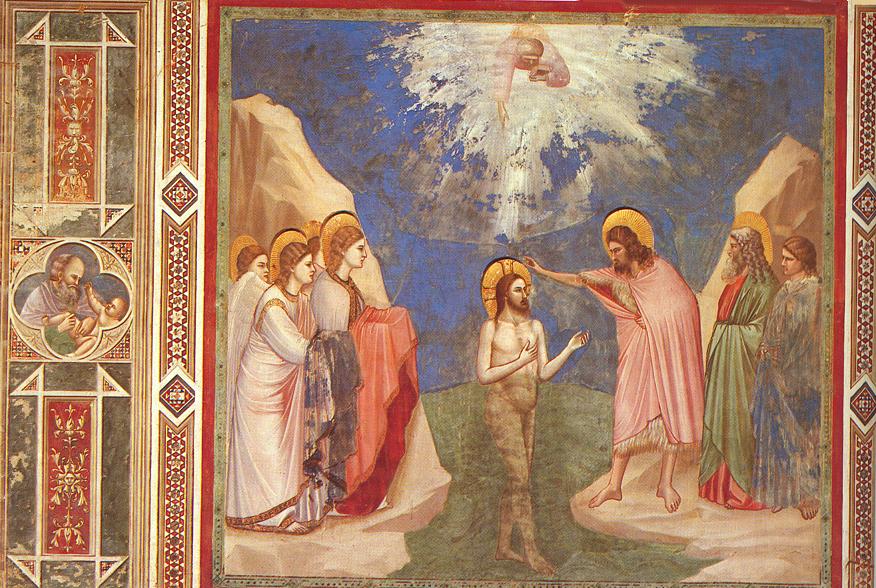
On the Feast of the Baptism of the Lord, this homily reflects on the meaning of Christian baptism through the voices of the early Church and the teaching of the Second Vatican Council. Baptism is presented as the foundation of Christian identity, naming us as sons and daughters of God, equal in dignity, and fully belonging to the Body of Christ. From this identity flows a mission, as every baptized person is sent into the world to build God’s kingdom of justice, peace, and love.


Listen to homily here:


Read homily here:


You may have noticed, either by coming to Mass or by looking at our email bulletin, that we have had a good number of baptisms in recent years. Every year around this time, we are required to make records of these things and send them to the Archbishop’s office. All of this data is then collected and forwarded to Rome.

So I had to add up the number of baptisms we had last year here at St. Peter’s, which came, if my arithmetic is correct, to sixty-seven. I was quite surprised by that number. Of course, in the Church we also love record-keeping, and here at St. Peter’s we have parish registers going all the way back to the founding of the parish in 1860. I began looking through those books to see when the last time was that we had this many baptisms in a single year. What I discovered was that the last time we had this number was in 1982, which, somewhat ironically, was around the time that I myself was baptized in this parish.

That is quite a while ago, and it is truly a blessing for all of us. It reflects the fact that many new families are coming to New Westminster and joining our parish community. It is a blessing, and it is also an opportunity for us to pause and reflect on our own baptism and on the great gift that baptism is in our lives.

On this feast that we celebrate today, the Baptism of the Lord, the Church gives us a unique opportunity to consider our own baptism, its meaning, and how in baptism we receive both an identity and a mission in Jesus Christ.

The early writers of the Church loved to speak very poetically about this event. The baptism of Jesus struck them, as it does us, as a profound paradox. How is it that Jesus Christ, who is God, comes to be baptized by John, a human being? How is it that the one who is without sin submits himself to baptism? These early writers often described how Christ’s baptism allows something extraordinary to happen for each and every one of us, and they expressed this mystery with rich and beautiful language. I would like to share some of that language with you this morning.

Saint Ephrem, who lived around the year 350 in Syria, was a deacon, theologian, and one of the great poets of the early Church. He wrote many hymns that are still used today, especially in Syriac-speaking churches. Writing about this feast, he says:

“The River Jordan trembled
when it saw the Lord within its depths.
Fire entered the water,
and the water did not burn.
The voice of the Father thundered,
the Son stood in the Jordan,
the Spirit hovered like a dove,
one mystery revealed in three signs.”

Around the same time, another great writer of the Church, Saint Gregory of Nazianzus, writing in the fourth century, reflects on this mystery in these words:

“Christ is illumined. Let us shine forth with him.
Christ is baptized. Let us descend with him,
that we may also rise with him.
The heavens were opened, because the heavens were closed to us.
The Spirit descended, because he was exalting our nature.
The voice bore witness, because he was being borne witness to.”

And finally, Saint Maximus of Turin, who was bishop of Turin around the year 420, offers this brief but powerful statement:

“The Savior wills to be baptized, not that he might be cleansed, but that the waters might be cleansed by him.”

Through these voices, the early Church helps us see that in the mystery of Christ’s baptism, Jesus is preparing the way for our own baptism. He enters the waters so that we might receive this central sacrament, a sacrament that changes our lives.

Some fifteen hundred years later, the Church gathered for the Second Vatican Council, the most recent ecumenical council of the Church. Ecumenical councils are moments of profound teaching, when bishops from around the world gather to reflect on the life of the Church and to articulate the faith anew in light of the present moment. Pope Francis has recently begun a catechetical series reflecting on the documents of the Second Vatican Council, highlighting their enduring relevance for us today.

One of the most important documents of the Council is Lumen Gentium, which means “Light to the Nations.” This document speaks powerfully about what baptism does for us. As we see in the Gospel today, baptism touches something fundamental about identity. When Jesus descends into the water, his identity is affirmed. He is revealed as the Son of God.

In our baptism, the same thing happens to us. Through Christ, we receive an extraordinary dignity. We become sons and daughters of God. In the ancient world, the family to which one belonged made all the difference. It shaped one’s place in society and one’s entire future. In baptism, we receive a new identity and a radical equality. We are all sons and daughters of God, sharing the same grace and the same life.

Lumen Gentium, number ten, states: “The baptized are consecrated to be a spiritual house and a holy priesthood.” Through baptism, we receive our name and identity, and we also come to belong to the Church, and therefore to one another.

The Second Vatican Council emphasizes that baptism is our most fundamental vocation. At times in the past, there may have been a sense that some Catholics were more important than others, perhaps clergy or religious. While each of us has a distinct vocation, Lumen Gentium reminds us that baptism is the first and most important calling we receive. It is through baptism that we belong to the Body of Christ, and therefore every person matters. There are no passive spectators in the Church.

Lumen Gentium, number thirty-two, says, “There is a true equality in dignity and action among all the faithful.” In baptism, we become part of the Body of Christ, and each of us has a role to play in the mission of Jesus.

Finally, baptism does not only give us identity and dignity. It also gives us mission. By baptism, we become part of the Body of Christ, and the Church continues the mission of Jesus in the world. We are called to help build the Kingdom of God, a kingdom of justice, peace, and love.

Lumen Gentium, number thirty-one, teaches that the baptized, by their very vocation, seek the Kingdom of God by engaging in the affairs of the world and ordering them according to God’s plan. Because we are baptized, we are sent back into our families, workplaces, schools, and communities with new eyes, called to shape these places according to God’s vision.

Baptism gives us an identity as sons and daughters of God, confers great dignity, incorporates us into the Church, and sends us on mission. For this reason, it is important to remember our own baptism and even to celebrate it.

I love a piece of advice Pope Francis gave early in his pontificate. He asked people, “Do you know the date on which you were baptized?” If you do not know it, he said, find out. Put it in your calendar. Mark it in some way. It is an incredible day in our lives.

Perhaps that is our challenge today, as we reflect on the Baptism of the Lord and what it means for us. Do we know the day on which we were baptized, and if we do, how are we remembering and celebrating that gift?

Not Safe, But Good: Following Christ Like the Magi

 Epiphany 2026

Following Jesus is not always safe or predictable, but it is always good, as shown in the journey of the Magi who risk everything to encounter Christ. Drawn by the star, they follow Jesus not out of fear or obligation, but because they are attracted by his goodness, truth, and beauty. This Epiphany reminds Christians that discipleship means allowing Christ to change our lives, trusting that his goodness leads us to true fullness of life, even when the path is risky.

File:Brooklyn Museum - The Magi Journeying (Les rois mages en voyage) - James Tissot - overall.jpg

Listen to homily here:


Read homily here:

I think many of us are familiar with the book The Lion, the Witch, and the Wardrobe. Either we read it, and I know I had to read it when I was in elementary school, or we have seen the movies. It has become a popular series, especially to watch during the wintertime.

The Lion, the Witch, and the Wardrobe was written by C.S. Lewis, who was a deeply committed Christian. He was Anglican, not Catholic, but certainly a man of profound Christian faith. Lewis wrote this book as an allegory, meaning that different characters stand in the place of figures from the New Testament.

The story follows a group of siblings who make their way through a wardrobe into the land of Narnia. When they arrive, they discover that this land is under the grip of an evil witch, who symbolizes evil itself. Eventually, the children take refuge in the home, more like a hut, of a beaver family, Mr. and Mrs. Beaver. There, they learn more about the land of Narnia, about the power of the witch, but also about the hope that still exists among the people.

The Beavers begin to tell the children about a figure named Aslan. Aslan, of course, stands in the place of Jesus in the story. They explain that Aslan is a king who will return and free the land from the witch’s power. In other words, he will rescue Narnia from slavery to evil, just as Jesus comes to rescue the world from slavery to sin.

At one point, the Beavers tell the children that Aslan is not a human being, but a lion. This leads to a memorable exchange between Lucy, the youngest child, and Mr. Beaver. When Lucy hears that Aslan is a lion, she asks rather nervously, “Well, is he safe?” Mr. Beaver responds, “Safe? Who said anything about safe? Of course he isn’t safe. But he’s good. He’s the King, I tell you.”

With this brief exchange, C.S. Lewis captures something essential about who Jesus is and what it means to follow him. And we see this same truth reflected in today’s Gospel story of the Magi. Jesus is good, but he is not safe, if by safe we mean that following him will involve no risk or no change.

Jesus Christ is good. He loves us. He wants what is best for us. He walks with us through our lives. He even died to save us. Jesus is ultimately good. But he is not safe in the sense that following him will leave our lives unchanged or completely predictable.

When we follow Jesus, we often find ourselves challenged to change our behavior, to let go of bad habits, or to serve in ways we had not planned. Sometimes we discover that God has something different in store for us than what we had imagined. Something better, perhaps, but also something risky, something unexpected, something that does not feel entirely safe.

We see this clearly in the lives of the Magi. They are drawn to Jesus not by fear, but by goodness. Something attracts them, symbolized by the star, and they set out to follow it. Yet their journey is risky. They encounter Herod, who schemes to destroy Jesus and attempts to manipulate them. Their decision to seek Christ puts them in danger.

And after they meet Jesus, their lives are changed forever. We are told that they return home by a different road. Encountering Christ brings fullness of life, but it also brings change. Their path is no longer the same.

So it is for us. Following Jesus can be risky. Around the world today, many Christians face real persecution for their faith. We think of Christians in places like Nigeria, Somalia, North Korea, or Iran. For them, following Christ carries serious danger.

But even for us, following Jesus can feel risky in quieter ways. It can mean going against the flow of our culture. It can mean choosing compassion, forgiveness, or integrity when those choices cost us something. It can mean being challenged to change, to put others before ourselves, to let Christ reshape our priorities. That kind of change can feel unsafe.

Yet we follow Jesus because of his goodness. Like the Magi, we are drawn by a star.

There is an image sometimes used of a rabbit being guided either by a stick or by a carrot. A rabbit can be forced forward by being struck from behind, or it can be drawn forward by something attractive placed in front of it. The question for us is similar. Do we follow Christ because we feel pressured, guilty, or afraid? Or do we follow Christ because we are drawn to him, because we recognize his goodness?

The Magi were not forced to follow Jesus. They were attracted. They saw the star and were drawn by what it promised.

Philosophy speaks of what are called the transcendentals: beauty, truth, and goodness. These are realities that attract every human heart. In Jesus Christ, we encounter all three. There is a beauty in his life and love that draws us. There is a truth in his teaching that helps us understand ourselves and the world. And there is a goodness that satisfies the deepest longings of our hearts.

Following Jesus means following that star, allowing ourselves to be drawn by his beauty, his truth, and his goodness.

As we reflect today on the journey of the Magi, let their journey become our own. We acknowledge that there will be detours, struggles, and risks along the way. But we also trust that we are being drawn by Christ himself.

And so we remember the wise words of Mr. Beaver. Jesus is not safe, but he is good. And he is our King.