Jesus the Good Shepherd and the Gate (4 Sunday Easter)

 4th Sunday of Easter - Good Shepherd Sunday - John 10:1-10

This Sunday, Good Shepherd Sunday, we celebrate the sacrificial love that Christ has for us. The image of Christ as the gate (Jn 10:1-10) shows us that we are called to participate in this gift of salvation. On this Day of Prayer for Vocations, we remember that we do this by responding generously to our own vocation.

File:Good shepherd 01.jpg - Wikimedia Commons

Listen to homily here:


How to recognize the Risen Christ (3 Sunday Easter)

On the Road to Emmaus (Lk 24), two disciples had their sorrow transformed into joy when they finally recognized the Risen Jesus who was in their midst the whole time. This story not only tells us about a past encounter. It also teaches us who live long after the Ascension how we can recognize the Risen Christ who is present to us in the scripture, the Eucharist, community, and charity.

Listen to homily here:

Doubt and Mercy (2 Sunday Easter - Divine Mercy)

We can learn a lot from the example of "doubting Thomas" we read about in the Gospel (Jn 20:19-31). Like him, we should be open with God about what we need so that Divine Mercy can transform our lives.

Listen to homily here:


People of the dawn not dusk (Easter Day)

Easter fills us with hope. Just as the rising sun at dawn bring the promise of a new day, so the Resurrection ensures that the Light of Christ will conquer all the darkness of sin and death. When we renew our baptismal creed at Easter, we recommit ourselves to being people of the dawn, bringing the light of Christ to those around us.


Listen to homily here:


Now we know the end of our story (Easter Vigil)

During the Easter Vigil, we have the opportunity to hear the highlights of the story of God's interaction with humanity. In the Gospel, we hear the end of the story, the triumph of love and life over sin and death. At our baptism, we enter into this story. Knowing that our story ends in life transforms us here and now. As the candles that we light as the Vigil from the Pasqual Candle light up the Church, so we spread the light of and love of Christ around us.


Listen to homily here:


Why is this Friday Good?

Good Friday, 2023

Good Friday reveals to us that we received mercy from a God who loves us rather than strict justice. This mercy cannot end on the Cross. We receive this mercy as a gift we share with others.


Listen to homily here:


Remembering the past to change the present (Holy Thursday)

Holy Thursday, 2023

The theme of remembering runs through the readings for Holy Thursday. The Passover is a remembrance of the Exodus. The Lord's Supper or Eucharist is in remembrance of the Last Supper. The remembrance that the Jesus speaks about at the Last Supper is meant to transform us to become servant like Him, treating all with dignity and love.

Listen to homily here:


Why did the crowd reject Christ? (Palm Sunday, yearA)

The two Gospel we hear on Palm or Passion Sunday show diverse reactions to Jesus. While there are some who stand by Jesus through His Passion, many abandon Him. Why? The answer can be found in the palms they waved. Jesus was an unexpected Messiah.

Listen to homily here:

Three Tombs (5 Sunday Lent, C)

The story of Jesus raising Lazarus from the dead (Jn 11:1-45), speaks to us of three tombs, the tombs of Lazarus, Jesus, and our own. This story shows up the compassion Jesus has for those who mourn and the life Jesus gives us, now and for eternity.


Listen to homily here:


Is our faith blind?

Homily for 4 Sunday Lent, year A

The Gospel this Sunday (Jn 9:1-41) tells the story of Jesus giving sight to the blind man. It is rich in symbolism. The Gospel teaches us how Jesus is the light of the world. Just as the pillar of fire led the people of Israel through the wilderness, so Jesus is the light that guides us. Further, the Gospel challenges us to consider how we respond to Jesus, the light of the world. Do we reject Jesus as his opponents did? Are we hesitant in our faith like the parents of the blind man? Or, do we allow Jesus to deepen our faith as the blind man did?

Listen to homily here:

Water and the Spirit in Samaria

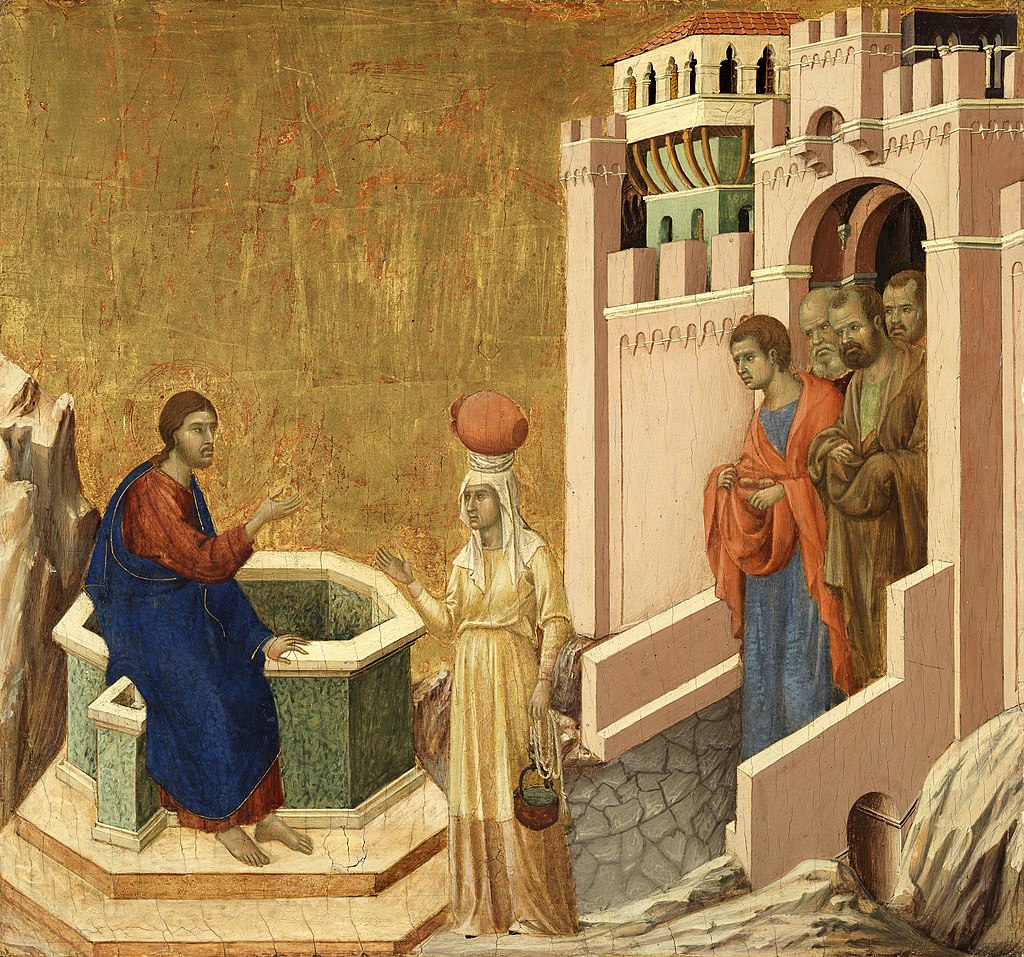
Water is a basic human need. When we lack water, we can experience a thirst that can be painful at times. In Jesus' interaction with the Samaritan woman (Jn 4:5-42), the image of thirst is used to explain how we all have deeper longings in our heart that Christ satisfies with His gift of the living water.


Listen to homily here:

Mini-transfigurations

 2 Sunday Lent, year A (Matthew 17:1-9)

Just before His journey to Calvary, the Transfiguration of Jesus gave hope to his followers by giving them a preview to the end of Christ's story: the Resurrection (Mt 17:1-9). In our lives, God gives us mini-transfiguration moments which give us hope in the midst of our challenges


Listen to homily here:


Sirens, Orpheus, Temptations, and Christ

1 Sunday Lent, Matthew 4:1-11

Similar to how the song of Orpheus conquered the Siren's song, so Christ points us towards our true good and away from temptations which can never fulfil us.


Listen to homily here:

Frenemies

7 Sunday of Ordinary Time

When we think of someone who we may consider an enemy, Jesus teaching to love that person can seem impossible (Mt 5:38-48). Part of the problem can be that we misunderstand what Jesus means by "love". Ultimately Jesus teaches us that non-violent resistance and forgiveness is the path that brings lasting peace.


Listen to homily here:


Does Jesus make our lives more difficult?

In the Gospel this Sunday (Matthew 5:17-37), Jesus tells us that He came to fulfill and not abolish the Law or the prophets. What does this mean? From the examples Jesus gives, we learn that He emphasizes our interior motivations for following the commandments. Jesus wants us to follow the commandments of course, but our living relationship with God is what is most important. As Benedict XVI wrote in Deus Caritas Est,

“Being Christian is not the result of an ethical choice or a lofty idea, but the encounter with an event, a person, which gives life a new horizon and a decisive direction.”

Listen to homily here:


This little light of mine

In the Gospel today Jesus (Mt 5:13-16), Jesus teaches us a lesson we all probably learned in Kindergarten: we are called to transform those around us by being salt and light. We do this by letting the light of Christ, which we received at our baptism, shine through us to those around us.


Listen to homily here:


Would Jesus go viral?

 4 Sunday OT (Mt 5:1-12)

Social media if full of influencers who try offering advice to people, telling them what it means to live a good life. Those who create this content want to get the maximum number of people watching them - they want to go viral. If Jesus had a social media platform in which he offered His teaching, would He go viral? When we hear the Beatitudes in today's Gospel (Mt 5:1-12), it seems that such teaching would not gain traction online because it does not seem logical. How can those who mourn or are persecuted by "blessed"? Who would want that? The truth of the Beatitudes, however, is realized only when we live them out.

Listen to homily here


We all get chosen for Jesus' team

 3rd Sunday of Ordinary Time

In the Gospel today, Jesus choses his initial followers, the first members of His team (Mt 4:12-23). Sometimes we might fear we don't have what it takes to be chosen by Christ. In reality, He calls all of us. We are all necessary and important members of the community.


Listen to homily here:


Being a commercial for Christ

 2nd Sunday of Ordinary Time

John the Baptist was like a commercial for Christ. By his words and actions he drew people to Jesus (Jn 1:29-34). In our baptism, we are called to imitate John the Baptist, being signposts directing people to the goodness of Jesus.


Listen to homily here:


Following the Magi, following a star

The story of the Magi (Matthew 2) is more than just a nice story to tell at Christmas. The stages of their journey to encounter Christ parallels our own experience as we follow Jesus. Their story is our story.

Listen to homily here:


The value of silence (Mary Mother of God)

We may want to imitate one practice of Mary as a New Year's resolution. The Gospel today (Lk 2:16-21) shows us the ability of Our Lady to "ponder" the wonders God was working around her. By taking some time in silence each day, we too can ponder the ways God blesses us and be strengthened and filled with hope.


Listen to homily here:

Playing a role in the Christmas story

 Merry Christmas!

When we listen to the Christmas story, we hear about many characters (Mary, Joseph, Shepherds, Magi) whose lives were changed when they chose to play a role in the story of Jesus. This Christmas, let us not only hear the story of Jesus' birth, but participate in it and be transformed.

Listen to homily here:


What's in a name? (4th Sunday Advent)

For each of us, our name is so important. Our parents selected our name with care. Our names mean something. The same goes for Jesus. The Gospel today (Matthew 1:18-24) shows us what the name of Jesus - Emmanuel - indicates about who He is.

Listen here: 


Guess Who, Jesus Edition (3 Sunday Advent)

 Like John the Baptist, we too can be confused about the identity of Jesus. What kind of Saviour is he? In the Gospel (Matthew 11:2-11), Jesus teaches us that he always brings us life and joy. Let us invite others this Christmas to experience this joy.


Listen here:

Tree talk

2nd Sunday Advent, A

The Christmas tree is an important symbol during this time of year. In the Mass for the Second Sunday of Advent, we find trees beings used as images in both the first reading and the Gospel (Isa 11:1-10; Mat 3:1-12). This "tree imagery" communicates the way that God brings new life from seemingly helpless situations as well as how we sometimes need pruning before God's goodness can flourish.

Pieter Brueghel the Elder, Public domain, via Wikimedia Commons

Listen to Homily here:

Being aware of God everyday (1st Sunday Advent)

1st Sunday Advent, year A | Mt 24:37-44

God is always present in our lives, blessing us. However, we sometimes miss God's presence. In the Gospel, Jesus teaches us that his arrival in our lives is similar to the time of Noah. Advent is a time to train our "spiritual eyes" to recognize the presence of God in our lives.

Listen to homily here:

It’s the end of the world and I feel fine (33 Sunday OT, C)

33 Sunday OT, Year C

Luke 21:5-19

It is strange to hear Jesus speak about the end of the world in the Gospel today (Luke 21:5-19). Although foreign to us, this "apocalyptic" way of speaking is meant to challenge as well as console us. The world as we know it is ending, but Jesus is bringing a better one into existence.

James Tissot (French, 1836-1902). Jerusalem Jerusalem 

Listen to homily here:

Spooky Season meets the resurrection

 32 Sunday of Ordinary Time, year C

2 Mc 7:1-2, 9-14 | Lk 20:27-38

Just after Halloween, with days getting darker, we tend to focus on spookier things like our own mortality. In the Church, we pray for the faithful departed during November. This is a time to consider our death, but always through the lens of our hope in the resurrection.


Listen to homily here:

Holger Motzkau 2010, Wikipedia/Wikimedia Commons (cc-by-sa-3.0), CC BY-SA 3.0 


Seekers Welcome

31 Sunday OT, year C

In Jesus' encounter with Zacchaeus (Lk 19:1-10) we seek that Jesus will not prevent anything from coming in the way of people encountering His goodness. As a Church we are called to imitate Jesus' example, making space for everyone to meet Christ and be transformed.


Listen to homily here:

God can't help us if we don't want help

God's grace and mercy are freely available to all. When we think we do not need God, however, God cannot help us. When we behave like this, we can often be judgmental and unmerciful towards others. In the Gospel (Luke 18:9-14), Jesus calls us to imitate the tax collector. Because he recognized his need for God, he was blessed.

Listen to homily here:

Praying is tough - don't give up!

29 Sunday Ordinary Time, C

Prayer is a tricky business. Sometimes we don't get what we ask for in prayer. We can feel like giving up with prayer altogether. In the Gospel (Lk 18:1-8) Jesus encourages us to persevere in prayer. God the Father will give us what is best for us. The first reading (Ex 17:8-13) hints at the idea that we can help one another to persevere in prayer. 

Listen here:

Gratitude leads to joy (28 Sunday OT, C)

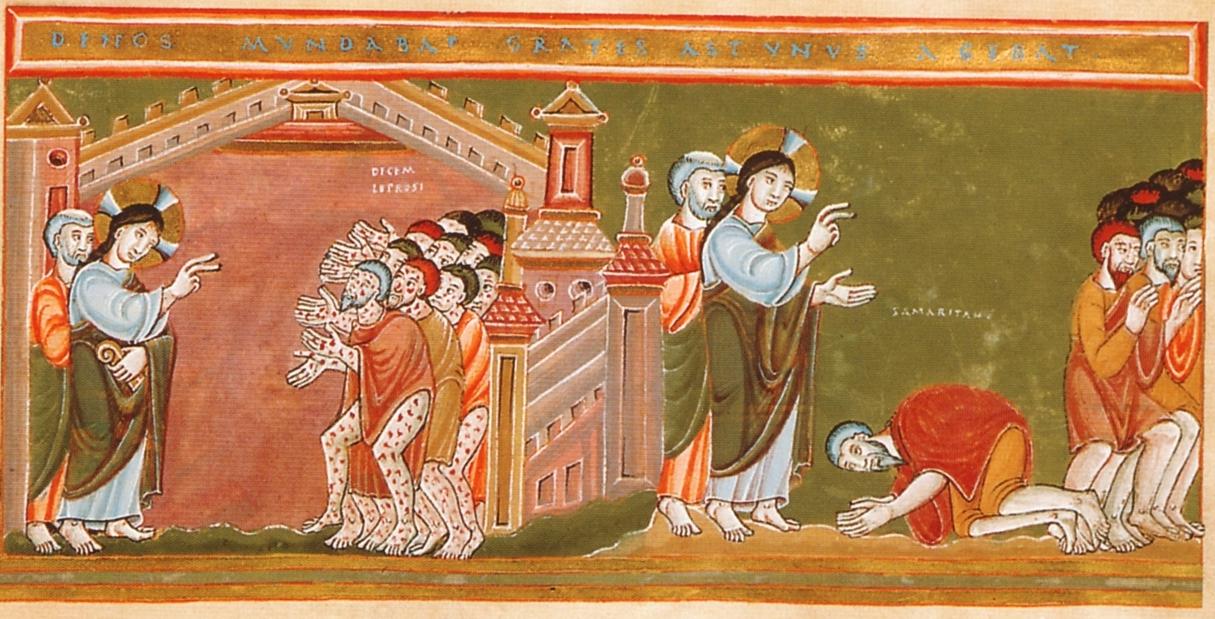
Happy Thanksgiving! The Gospel today (Lk 17:11-19) teaches us about the power of gratitude. Gratitude is able to cut through the darkness caused by suffering and helps us to recognize the many ways God blesses us daily. Gratitude leads to joy.


Listen to homily:

Don't doubt your faith!

Like the disciples in today's Gospel (Luke 17:5-10), because of various doubts we can think that our faith is fragile and insignificant. Jesus teaches us that true faith is expressed in faithful actions, in serving God and neighbour without hope of personal gain. Even with a little faith we can do great things in God's name.

Ford Madox Brown, Public domain, via Wikimedia Commons

Listen here:

The final exam question revealed!

In the story today about the rich man and Lazarus (Luke 16:9-13), Jesus gives us the question we will all be asked at judgement: what have you done to help the poor? Unlike the rich man in the Gospel, let us share generously with those who are in need around us. Who is a "Lazarus" in your life?

Listen here:

Divine Economics

Who will welcome us into God's Kingdom? Those we have given to without counting the cost. In today's Gospel (Luke 16:1-13), Jesus describes the economics of God and teaches us an important lesson about stewardship.

An etching by Jan Luyken  in the Bowyer Bible, Bolton, England

Listen here:

The name of God is mercy (24 Sunday OT, C)

In the Gospel today (Luke 15), we hear three parables which tell us about the mercy of God. God loves all. God has a special love for those who are suffering. He is always with us and seeks us out when we are in need. As Pope Francis said, "the name of God is mercy".

 La drachme perdue, J.J. Tissot


Listen to here:

What does Jesus mean by ”hating” mother and father? (23 Sunday OT, C)

When Jesus tells his follows to "hate" mother, father and even our very self (Lk 14:25-33), He is not suggesting that we should distain particular individuals. Rather, He warns us that we cannot construct our identity based on family ties or social status (e.g. "I am from a wealthy and powerful family therefore I am superior" or "I am from a family of limited means and influence therefore I am of less value than other"), as was common at His time. Rather, be a disciple our identity needs to be rooted in Christ. When we do this, we can truly love others and have a proper understanding of our own dignity.

The Calling of Saints Peter and Andrew, Caravaggio

Listen here:


Being grounded (22 Sunday OT, C)

The Gospel today (Lk 14:1, 7-14) illustrates the importance of humility and shows it is much more than a way of thinking about ourselves. True humility involves giving with no strings attached, just as God is generous with us.

Pieter Bruegel the Elder - Peasant Wedding

Listen here:


Knocking at heaven's door (21 Sunday OT, C)

21 Sunday OT, C | Luke 13:22-30

Rather than closing the door of salvation to others, Jesus encourages us in the Gospel (Luke 13:22-30) to make sure that each of us personally walk through the door Christ has opened which leads to God's Kingdom.

Listen here:  


Door to Basilica of Nativity (source)


Read full homily:

Doors are a powerful symbol, so much so that the theme or symbol of a door appears in various songs from Bob Dylan’s “Knocking on Heaven’s” to, more recently, “Love is an open door”, from the movie frozen. Doors can symbolize many things. An open door can denote welcome, while a closed door can make us feel shut out and excluded. In the Gospel today, Jesus is asked an important question: “are only a few being saved?” In responding to this question, Jesus uses door imagery. He speaks about a number of different doors in the Gospel: a narrow door (v. 24), a door slammed shut (v. 25) and even a seemingly infinite number of doors open to all (v. 29). In order to better understand Jesus’ response to the question, “are only a few being save?”, let’s dig deeper into the rich door symbolism.


There is a perennial temptation to close the door of God’s salvation and mercy to certain groups of people. At Jesus’ time, the question of who was being saved was much discussed. Were only Jewish people saved, or could Gentiles also be considered a part of God’s people and be saved as well? Would all Jewish people be saved or just certain kinds of Jewish people, that is, certain groups within Judaism? There was a tendency to limit who could be saved, to close the door of God’s goodness to some. We can do the same today. In 2020, Pope Francis wrote an important document called Fratelli Tutti, which can be translated as “We are all brothers and sisters”. In this document, Pope Francis discusses a negative trend that often marks our society, namely, polarization. For example, we can be polarized along political lines. People are either conservative or liberal. Depending on our outlook one is good while the other is bad. When this way of thinking enters the Church, there can be damaging effects. We can think that God could not possibly be with people of other religions. Or we can think that only my particular subgroup within the Church is the “correct” one. God is with my type of Catholic and not others. Just as at Jesus’ time, we can run the risk of closing doors on people, thinking that certain individuals or group cannot access the mercy and goodness of God.


In the Gospel today, Jesus challenges this way of thinking, proclaiming that the doors of salvation are open to all. To those who may think that only their group can be saved Christ proclaims that all people can become a part of God’s family. His mercy and goodness extends to all. Jesus says that Gentiles, that is, non-Jewish people can become a part of God’s kingdom. In fact, people are pouring into God’s kingdom, from all directions, the east and the west. The doors of God’s salvation are open to all. Jesus even goes so far as to say that we will be surprised about who will be a part of God’s kingdom, about who will be saved. He says that “some who are first will be last and some who are last will be first.” God’s way of thinking about salvation is quite different than ours at times. You may have heard the story and about the priest and the taxi driver who arrive at the pearly gates of heaven. St. Peter welcomes them and shows them to their homes. He guides the taxi drive to a wonderful mansion. "Thank you," the thrilled taxi driver said. Anticipating an even larger mansion, the priest was dismayed when they arrived at a small 1-bedroom apartment. "St. Peter, I'm confused," the priest began. "As a priest, I devoted decades of my life solely to serving the Lord. How come the taxi driver got a mansion, and for me, only a small apartment?" St. Peter smiled. "Up here, we go by results. While you preached, people slept; while he drove, people prayed”. Jesus tells us that God’s salvation is available to all. Some of those who we close the door on may ahead of us entering God’s kingdom.


Rather than closing the door of salvation to some individual or groups of people, Jesus encourages us to focus on ourselves and ensure that we personally enter through the door that leads to salvation. The door to salvation is narrow, Jesus tells us. We need to do something in order to enter it. As Jesus so often does when he is questioned by people, he changes a theoretical query into practical advice. When Jesus is asked about whether few or many are being saved, people expect him to respond with a list of groups of people who can be saved: Jew or non-Jew, this kind of Jewish person or that. In Jesus’ response, he makes it clear that the background of people is not as important as their behaviour. The door of God’s salvation, love and mercy are open to all. All can enter in and become a part of God’s family. What matters is how we act – each of us personally – that determines whether we walk through the door and enter God’s kingdom. In other words, rather than judging others, we need to be concerned with ourselves.


At the Basilica of the Nativity in Bethlehem, there is a famous door. The door to enter this Church that is built over the site of Christ’s birth is quite low. Everyone can get through the door. However, you need to bend down to enter it. Historically, this door was probably built in this manner to ensure that people on horseback did not enter the Basilica. Over the years, however, the door was given a metaphorical message that expresses well Jesus’ point in the Gospel. All can enter through the door that leads to Jesus and the salvation that He brings. Although we can all enter, we personally need to make some changes to enter the door. To lower ourselves, to be humble, to serve others more than ourselves. Today, Jesus encourages us once again to walk through this door that leads to God’s salvation and goodness.


Living each day like it’s our last (19 Sunday OT, C)

 19th Sunday of Ordinary Time, year C, August 6, 2022

Luke 12:32-38

With His emphasis on judgement and violent punishment, the language of Jesus in the Gospel today (Luke 12:32-38) is startling. He sounds like a "fire and brimstone" preacher declaring a message that seems far removed from the Gospel of love and mercy with which we are accustomed. When we look closer, however, Jesus' proclamation about judgement is in fact Gospel. It is good news.

Last Judgement, Michelangelo

Listen here:

Full homily:

We're all probably familiar with the cliche of “a fire and brimstone preacher”. We see this kind of preacher in movies. A “fire and brimstone preacher” brings to mind someone standing in the pulpit, wildly waving his hands, shouting loudly, and perhaps red in the face. Such a preacher uses vivid descriptions of God's judgment and eternal damnation to move the congregation to change their ways. Don't worry, I am not about to become a fire and brimstone preacher! I imagine that many of us think that fire and brimstone preaching is something that belongs in the past. We would not want to see it again. It relies too much on motivating people by fear rather than love. It is difficult to see this as Gospel, as good news.


With this in mind, the Gospel of today is startling because Jesus is behaving like a fire and brimstone preacher! He speaks about a final judgement when the master will return after being away for a long time. Those servants who are ready for the master’s return will receive a reward, while the others who are not ready will receive a severe punishment. The language is harsh. Jesus says things like, “that slave who knew what is master wanted, but did not prepare himself or do what was wanted, will receive a severe beating”. If this is not fire and brimstone preaching, I don't know what is! What can we make of all this? Why is Jesus speaking in such a severe way? This does not sound like good news. What does this have to do with the Gospel of love and mercy with which we are so accustomed to Jesus preaching?


When we look closer however, we realize that the Jesus’ emphasis on judgement is in fact good news for those who have tried to follow Him. When we try our best to follow the way of life Jesus lays out for us, judgement is not something to be feared, but rather something to look forward to. Early Christians prayed for the rapid return of Jesus. A common prayer was, maranatha, which means “Come Lord” in Aramaic. Early followers of Christ longed for him to return as judge. Jesus tells us that for those “whom the master finds alert when he comes; truly I tell you, he will fasten his belt and have them sit down to eat, and he will come and serve them.” That a master would serve and care for a servant in this way is truly remarkable. We would hardly expect a CEO of a multinational corporation to go down to the assembly line in one of the company’s many factories, find a worker who is doing his or her job well, and take that worker out to enjoy the most lavish of meals which the CEO has prepared from scratch. This, however, is how Jesus will care for those who have followed him faithfully. They will enjoy eternal life with God. This communion with with the Holy Trinity is goodness and complete happiness. For those who have been faithful, is a wonderful thing!


The judgment which Jesus speaks about is also good news for those who have been downtrodden, oppressed, and treated poorly. Throughout the Bible, we find many passages grappling with the following paradox. Why is it that bad things happen to good people and bad people seem to get away with their behavior, and even prosper? These questions are raised in various books, such as Ecclesiastes. These questions naturally arose in the minds of biblical authors. The people of Israel lived a tumultuous history. They were persecuted and oppressed by one empire after another: Egypt, Assyria, Babylon, Persia, Greece, and finally, during the time of Jesus, Rome. In the time before Jesus as well as during his life the people of Israel suffered terribly. They were robbed of their autonomy and oftentimes forbidden from practicing their religion. They longed for a time when God would exercise justice upon those who had harmed them. We can feel the same way. When we look out throughout human history, even in recent years, we see people committing great evil and violence against the innocent. Brutal regimes violently persecute minority groups within their boundaries. Wealthy corporations exploit the poor and vulnerable for profit. Such wrong doers appear at times to thrive. This reality seems to fly in the face of our conceptions of a just, loving God who cares for the downtrodden. For this reason, the message that evildoers – such as the servants who ruthlessly beat other servants – will be punished can seem like a relief. Wickedness will not continue indefinitely. Wrongs will be made right. The judgement that Jesus speaks of is good news because, in the end, goodness and justice will prevail.


While it may not seem like it at first glance, the Gospel today is a positive message because it encourages us to live our best life, to make our existence matter. The main lesson of the Gospel is this: always be ready to meet Jesus. Christ teaches us to live each day as though it were our last. Although this may seem grim at first glance, this attitude helps us make the most out of life and all the blessings God has bestowed on us. Some years ago (2007) a movie was released called “The Bucket List” starring Jack Nicholson and Morgan Freeman. In this, both characters played by the leads were diagnosed with terminal cancer. Since one of the characters happens to be a millionaire, the pair decide to embark on an incredibly journey in which they do all the things they wish they could have done in their lives – their bucket list – in the few months they have left – before they “kick the bucket”. They go skydiving and visit incredible places. Now, the movie is flawed in many ways. However, the message the film attempts to convey is important. Ultimately, the pair learn they should always have lived their life as though time was limited. Knowing that they had a fixed number of days to live helped them make the most of their life. This attitude should characterize our lives as followers of Jesus. We should always be ready to meet Christ. We ought to live our life in the best way possible, the way Jesus has called us to. This will probably mean that things like skydiving won’t be the highest on our bucket list. Rather we will be concerned with following the Gospel here and now. We will be sure to reconcile with those we have grown apart from. We will be generous with those around us, sharing our time, talents, and treasures. We will stay close to Jesus. Living our life constantly ready to meet Jesus means that we live our best possible life.


We rightfully are turned off by “fire and brimstone” preaching. Only Jesus can get the message right. Only He correctly presents the theme of judgement as good news. Still, the idea of living each day as though it may be our last can be frightening and intimidating. At least it is for me. If Jesus were to come back today, there are so many things in my life that I would want to change. In order to ensure we do not become overwhelmed, it is helpful to remember the adage often repeated by Desmond Tutu: “there is only one way to eat an elephant: a bite at a time.” As we sit here today, we could ask ourselves, “what is one thing Jesus might be asking me to change in my life starting now?” Let us try in this coming week to work on this one thing, always trusting that Jesus is a judge yes, but, most importantly, Jesus is a merciful judge. Jesus understands us. He loves us, and is patient with us.

Replacing greed with generosity (18 Sunday Ordinary time, year C)

Replacing greed with generosity

18th Sunday of Ordinary Time, year C, Sunday July 31, 2022


Readings: Ecc 1:2; 2:21-23; Lk 12:13-21


The Rich Fool, Rembrant

The Gospel today shows us that generosity rather than greed brings peace in the midst of the insecurities and uncertainties of life.


Listen here:


There was once woman who was married to a greedy husband. During his life, he was only interested in collecting more and more money for himself. He avoided sharing what he had with everyone, his own wife included. Towards the end of his life, the husband made his wife promise to bury him with his money. He even told her friends to make sure that she buried him with his money. The man passed away and, on the day of the funeral, just before the coffin was about to be closed, the wife called out, “wait!” She then approached the coffin with a box, put the box in the coffin, and then gave the instruction for the coffin to be closed. Afterwards, one of the wife’s friends approached her and asked, “what did you put in the coffin? You didn’t really bury your greedy husband with his money, did you?” To this, the wife answered, “of course I did! I am a woman who keeps her promises. After my husband passed away, I sold all he had, and transferred all this money, along with the money he had in all his different back accounts into my bank account. I then wrote my husband a cheque for the full amount that belonged to him. I put the cheque in a box and put the boxed into his coffin so he would be buried with his money.”


In the Gospel today, Jesus warns us about the danger of greed. In response to an individual who demands that Jesus make sure an inheritance is divided properly, Jesus responds with a parable about a rich man who builds barns to save his excess crops in, thinking that this will provide him with security for years to come. This man is told by God that he will die that very day and these goods he had saved for himself will belong to others. In telling the parable, Jesus has a clear aim in mind. He wants us to guard ourselves from “all kinds of greed” (Lk 12:15). In the Greek original of this Gospel, the word for greed is pleoxenia. According to Plutarch, the philosopher who lived just after the time of Jesus (46 – 119 AD), pleoxenia describes a desire to constantly obtain more and more. This kind of greed was likened to someone who is thirsty and drinks salt water. The salt water does not quench your thirst, it just makes you more and more thirsty. We can be greedy for all kinds of things. We can be greedy with money or other possessions. We can be greedy with our time, never wanting to spare some time for those in need. We can also be greedy with our talents, never wanting to lend a hand to those we can help. Of course, we need to be prudent and ensure we have enough to live on and be realistic with our time and how much we can help others. Greed is another matter, however. Greed is the desire to obtain more and more while never being satisfied. The more we get, the more we want.


The first step in overcoming greed is realizing that the constant desire to obtain more and more, can never give us true peace and security. In the parable, the greedy rich man hoarded his crops because he felt that this would provide him with a sense of security. After he stored the crops in his expanded barns he said to himself: “you have ample goods laid up for many years; relax, eat, drink, be merry.” According to Jesus, at the root of the man’s greed was a desire for security in an uncertain world. Crops may fail; disasters may strike. Feeling that life is insecure or precarious is natural. The unpredictable nature of our existence is one of the main themes of the book of Qoheleth, from which the first reading today was taken. Qoheleth is one of the most fascinating books in the Bible. When we read it, we can be shocked by the pessimistic tone. I like the book because it is honest and realistic. Qoheleth points out the precarious nature of life. At times, we all feel that our existence is frail and insecure. This is how the man in the parable felt. Jesus is not criticizing him for feeling this way. He is pointing out that the solution the rich man sought – greed, storing food for himself – is not a real solution. The man still died at an unpredictable time. The goods he hoarded went to another. You cannot cash cheques after you die.


Jesus shows us that generosity rather than greed will provide the security we all seek. At the end of the Gospel, Jesus contrasts storing up treasures for ourselves with being “rich toward God”, the true way to find the peace amidst the fragility of life. Being “rich” in the eyes of God means acting in a way that is consistent with who God is. Jesus’ parable shows us that ultimately God is in control of our life. We are not. God gives us life as a gift. God is the generous giver of all that is good. We are rich before God when we generous just as God is generous. When we are generous with our time, talents, and treasure, we acknowledge that we have received these all from a God who will always care for us. When we live this way, we experience peace. Gaudium et Spes, one of the most important documents coming from the Second Vatican Council puts it this way. Human beings only truly find themselves when they make a sincere gift of themselves (paraphrase of GS #24). 


Echoing the message we heard in the Gospel, Pope Francis is fond of saying, “there are no pockets in a burial shroud.” In the face of the insecurities of life, generosity and not greed is the solution. The Gospel today calls us to ask ourselves a few questions. When it comes to my time, talents, and treasures, am I being greedy? How can I be more generous with those around me: my family, friends, coworkers, or parish community? As we consider these questions, let us keep in mind the saying made famous by the movie It’s a Wonderful Life: “All you can take with you is that which you have given away.” 


Prayer and Pope Francis’ ”Penitential Pilgrimage”

The Gospel of today (Lk 11:1-13) teaches us to pray with confidence and perseverance. This week we have the opportunity to put this teaching into practice during Pope Francis' "Penitential pilgrimage". With him, we pray that this pilgrimage "will contribute to the journey of healing and reconciliation already undertaken".


Gn 18:20-32

Lk 11:1-13


One night, two young brothers were staying over at their grandmother’s house. It was just a week or so away from the younger brother’s birthday. As their grandmother was tucking the brothers in before bed, she reminded them to say their prayers. She then left the room to go next door, leaving the door ajar. The older brother said his prayers first, giving thanks to God for his family. Then the younger brother prayed. After he had thanked God as his older brother had, he suddenly raised his voice shouting, “And God, for my birthday next week, can you please get me a PlayStation 5!” The older brother then turned to the younger brother and said, “you don’t have to shout. God isn’t deaf.” To this, the younger brother responded, “I know, but grandma is”. 


Like that younger brother, we too can struggle with prayer and how it works. The first reading and the Gospel point us in the right direction.


To start, we should acknowledge that prayer is difficult for all of us. I think we can all be embarrassed by our prayer life sometimes. We often assume that everyone else has an amazing prayer life. All others have to do, we might think, is close their eyes and they are immediately filled with the presence of God. This is not the case! We all struggle with prayer, myself included. When I pray, I seldom have incredible insights or experience strong positive emotions. I can easily lose concentration and become distracted. I received a good reality check about the difficulty of prayer when I read an interview with the now deceased Cardinal Hume. Towards the end of his life this devout man was asked about his prayer life.  He responded:

Oh, I just keep plugging away. At its best it’s like being in a dark room with someone you love. You can’t see them, but you know they’re there.

In today’s Gospel, we find the disciples also struggling with pray. They ask Jesus to teach them how to pray. That the disciples and great Christians such as Cardinal Hume also struggled with knowing how to pray gives me hope. We all find prayer difficult.


A common struggle we all have in prayer has to do with that fact that the things we ask for often do not come to pass. This is a major tension in our prayer life. On the one hand, Jesus encourages us to trust that God is a loving Father who will always give us – his children – good things. This message comes across in the Gospel. After teaching his disciples the Lord’s Prayer, Jesus tells them to persevere in prayer, trusting that God the Father will give them what they need. On the other hand, we have all experienced that we sometimes do not receive what we ask for in prayer. This can be a very painful experience. We can feel that God is not listening, that our prayer is useless. How can we make sense of this tension in our prayer life? The prayer that Jesus taught us gives us a hint. In Luke’s Gospel – which we heard today – Jesus teaches us to prayer that “his [God’s] kingdom come”. In Matthew’s version of the prayer, he adds to this that we should ask God that “his will be done”. Although Jesus encourages us to ask God for what we need, he also wants us to know that we should desire that God’s will be done in our life. God always wants what is best for us. We ask for many things in prayer, but sometimes we struggle to know what is best for ourselves. Looking back, I recognize that there are some things that I asked God for in prayer that weren’t really what was best for me. I can see now that what actually happened to me at that moment, though not what I wanted at first, was actually what was best for me.  Prayer always does something. The first thing prayer does is change our heart. When we pray God slowly changes our hearts so that we begin to desire what God desires for us. Even when our prayers seem to have no result, we should continue praying, trusting that God is changing us as well as our circumstances.


This week, we, together with Pope Francis and Catholics throughout Canada, have much to pray for. From July 24 – 29 Pope Francis will be visiting Canada on what he has called a “penitential pilgrimage”. The idea of pilgrimage expresses well the nature of prayer that we hear about in the readings today. A pilgrim is someone who perseveres in prayer, being authentic and even daring with God in prayer as Abraham was in the first reading. At his Angelus address on July 17, Pope Francis explained the nature of his visit:

Dear brothers and sisters of Canada, as you know, I will come among you especially in the name of Jesus to meet and embrace the indigenous peoples. Unfortunately, in Canada, many Christians, including some members of religious institutes, have contributed to the policies of cultural assimilation that, in the past, have severely harmed native communities in various ways. For this reason, I recently received some groups in the Vatican, representatives of indigenous peoples, to whom I expressed my sorrow and solidarity for the harm they have suffered. And now I am about to embark on a penitential pilgrimage, which I hope, with God's grace, will contribute to the journey of healing and reconciliation already undertaken.


This week we are encouraged by Pope Francis to pray fervently that the journey towards truth and reconciliation continues. Although there remains much to do, having Pope Francis come to Canada is an extremely significant milestone along this journey. While efforts continue nationally and internationally, this journey is something we continue locally. I have been so encouraged to hear of all the important initiatives that have been undertaken at St. Peter’s Parish, under the direction of the Indigenous reconciliation committee, including the video series which has provided the opportunity to listen and learn from indigenous people. These initiatives will continue in the future so that we can go further on this path Pope Francis’ visit encourages us to follow. In the coming days, let pray for the penitential pilgrimage of Pope Francis, as he has asked. As we are encouraged in the readings today, let us pray with persistence and confident, trusting that God cares for us and answers our prayers.