“Are You the One?” When Faith Waits and Learns to See

 3 Sunday of Advent, Year C

John the Baptist’s question from prison reminds us that even deep faith can waver, especially in moments of suffering and disappointment. Jesus teaches that he is recognized as the Messiah not through arguments or certainty, but through lived experience—through healing, hope, and lives quietly transformed. The Gospel invites us to stop searching for substitute saviours and instead prepare space in our own lives, and in the lives of others, for Christ to be encountered.

File:Oberzell Alte Kirche Decke Johannes im Kerker.jpg

Listen to homily here:


Read full homily here:


In the Gospel today, we are presented with what is, if we are honest, a somewhat uncomfortable situation—something that might unsettle us a little. We are presented with the figure of John the Baptist, who is now in prison.

Recall that just last Sunday we heard about this incredible preacher: John the Baptist, courageous in the wilderness, calling people to repentance, calling them to prepare to receive the Messiah. John the Baptist, of course, even baptized Jesus. He saw the Holy Spirit descend upon him and heard the words from heaven: “This is my beloved Son, in whom I am well pleased.” We would assume that John the Baptist had unflappable faith, that he never doubted, that he possessed absolute certainty.

And yet, today in the Gospel, while John the Baptist is in prison, we hear him send a message through his disciples to Jesus, asking: “Are you really the one, or should we wait for another?” In other words, Are you, Jesus, the Messiah—the Saviour, the Christ—the one who is to liberate us?

This is an unsettling question, especially because it comes from John the Baptist, a man of such great faith. And yet, this Gospel is important because it gives us permission to voice doubts we ourselves may experience in our lives as believers. At times, we may struggle. We may wonder whether Christ is all we hoped for, whether Jesus is truly enough for us, whether he really is our Saviour and Messiah.

John the Baptist teaches us that even deeply faithful people—people who pray, who come to Mass, who live devout lives—can experience doubt and struggle. Each of us, in our Christian journey, encounters this. John’s example reminds us that this is a normal part of life as believers.

We find John today in a very difficult situation. Often, doubt arises precisely in moments of hardship. John has been imprisoned. He is struggling. We know that he will eventually be put to death. It is in this moment of suffering that he voices his question: Is Jesus the Messiah, or should we look for another?

We can see ourselves in John’s experience. We may pray faithfully and come to Mass, yet life does not always turn out as we hope. Illness enters our lives. Relationships break down. We may find ourselves without work, or lacking the things we need or long for. And we, too, can ask the same question: Is Christ truly the Messiah, or should we look for another?

In times of difficulty, we may search elsewhere for fulfilment or liberation. We may pursue ambition or wealth. We may distract ourselves with noise, busyness, or comfort—anything that promises to numb the pain or fill the emptiness.

St. Augustine, who lived about four hundred years after the time of Jesus, offers a powerful example of this searching. In his autobiography, Confessions, Augustine describes his long search for fulfilment and salvation. He looks for it in relationships, ambition, power, wealth, and various philosophical traditions. And finally, he discovers that true fulfilment is found in God through Jesus Christ. In his famous words, he writes: “You have made us for yourself, O Lord, and our heart is restless until it rests in you.”

From both John the Baptist and St. Augustine, we learn that doubt and searching can be part of our journey toward Christ. We may wonder whether Jesus truly is the Messiah, the Saviour in our lives.

The response Jesus gives to John is very telling. It teaches us how we come to know, with certainty, that Jesus truly is the Messiah. Jesus does not give John an argument or a proof. Instead, he points to experience, to encounter, to relationship.

When I was in university, I was one of the few among my friends who still went to Mass. I tried my best, though I was not always perfectly faithful. Many of my friends had grown up Catholic or Christian but had stopped practising, and others had no faith at all. We had many good conversations, and often the question was asked in different ways: Why do you believe? Why are you still Catholic? Why do you believe in Jesus?

At the time, I did not have a strong answer, and perhaps I still struggle to articulate one fully. But over the years, especially as a priest, I have journeyed with people of deep faith—even in the midst of suffering and difficulty. I have heard answers to that question that resonate deeply with me, and I believe they reflect the experience of many.

Some people say: “I stayed because when I actually prayed—when I really prayed—I became more patient, more honest, less fearful. I didn’t get all the answers, but I became more human.”

Others speak of suffering: “Christ is the Messiah because when I suffer, he does not disappear. He stays. He does not remove my cross, but he carries it with me.”

Still others say: “Christ is the Messiah because following him calls me out of myself—toward forgiveness, humility, and concern for the poor. Left to myself, I would settle for much less.”

Jesus teaches us in today’s Gospel that we come to recognize him as the Messiah through experience. He tells John’s disciples: “Go and tell John what you hear and see: the blind regain their sight, the deaf hear, the poor have good news preached to them.”

How would we answer that question ourselves? Why do we believe that Christ is the Messiah? How have we encountered Jesus in our own lives?

Even though John the Baptist struggles, Jesus calls him great—the greatest, in fact—because John prepares the way for others to encounter Christ. He makes space for Jesus to enter people’s lives.

We are called to do the same. We prepare space for Christ through our faithfulness, honesty, integrity, and kindness. We prepare space by living in a way that sparks curiosity. Why does this person respond with forgiveness rather than vengeance? Why do they face challenges with hope rather than despair? Why do they respond with gentleness rather than anger?

Finally, we prepare space through invitation. As we approach the Christmas season, we can invite others to join us for Mass. We can offer to pray with someone who is struggling. In simple ways, we can create moments where Christ can be encountered.

Today’s Gospel presents us with John the Baptist experiencing what is a very human moment—doubt in the midst of suffering. It also shows us that we come to know Jesus as the Messiah through experience: through the ways he heals, liberates, and saves us in daily life.

The Gospel challenges us not to search for counterfeit messiahs, but to be like John the Baptist—to prepare space in our hearts, and in the lives of others, to encounter the Messiah who has already come into the world.

Choosing Christ: The Advent Call of John the Baptist

 2 Sunday of Advent, Year A

The RCIA rites happening this weekend remind the whole parish that the Christian life is a journey of choosing again to follow Christ. John the Baptist calls each of us during Advent to examine our lives, let go of what holds us back, and take concrete steps toward deeper discipleship. While we act, it is God’s grace that brings true growth, renewing our hearts just as He brought new life from the stump in Isaiah’s prophecy.

File:John baptist byzantine.jpeg

Listen to homily here:


Tomorrow will be a very important day for many people in our parish community, and I would like to explain why. We will be celebrating two significant ceremonies for those participating in our RCIA program—that is, the Rite of Christian Initiation for Adults. Since September, a number of people have been gathering every Tuesday to pray together, search the Scriptures together, and deepen their faith. Unless you come on Tuesdays, you may not have met them, but it is important for us as a parish community to be aware of their presence, because they have made the decision to enter the Catholic Church here at St. Peter’s. We want to accompany them with our prayers. As we approach Lent and Easter, we will celebrate the scrutinies, and they will join us, especially at the 5 p.m. Saturday Mass.

Tomorrow is a very important moment for these RCIA members. Some are not yet baptized and are making the decision to enter the catechumenate through the Rite of Acceptance. Others are already baptized—often in another Christian denomination—and are taking the next step toward becoming Catholic. This year we are extremely blessed to have a large number of people in RCIA: just over thirty, which is double last year’s number. This is truly a sign, I believe, of the Holy Spirit. We have an incredible RCIA team, working hard each year, but this year in particular it seems that God is stirring many hearts.

The Rite of Acceptance and the Rite of Welcoming are important steps. Those participating are choosing to say, “Yes, I want to continue this journey. I have heard the voice of God calling me, and I want to follow Jesus and enter the Catholic Church.” These rites mark a decision—an act of discipleship.

It is significant that this is happening on the weekend when we hear today’s Gospel, because John the Baptist invites each of us to make the same kind of choice. On this Second Sunday of Advent, we too are faced with the invitation to choose again to follow Christ.

Some years ago, I had the opportunity to visit the area near the Jordan River where John the Baptist is believed to have preached. When you enter that place and see its starkness, you can appreciate something of his character. In the Gospel today, he strikes us as a bit of a wild man—clothed in camel’s hair, eating locusts and honey, living simply in the wilderness. And the wilderness itself is stark, dry, and austere. Yet in the Bible, the wilderness is a place of decision and of closeness to God. It was in the wilderness at Sinai that the people had to decide whether to accept the covenant God set before them.

I see John the Baptist as someone who calls us into this same adventure of following Jesus Christ. Because he is so passionate, his language is passionate. He tells us that to follow Jesus, we need to make changes in our lives. We need to prune away those things that hold Christ back from entering our hearts—habits, patterns, or attitudes that prevent us from following Him more fully. John the Baptist invites us to take action. What are those areas in our lives God may be calling us to move away from? What bad habits is He asking us to overcome? What patterns of prayer is He inviting us to renew? What relationships need healing? What acts of service is He prompting us to undertake?

John’s call to decision mirrors what our RCIA members are doing this weekend.

It is also important to remember that change in our lives does not come simply from our own effort. Yes, we must respond, but it is God who blesses us, God who brings grace and new life. In the first reading from Isaiah, we hear the image of a stump—a tree cut down and lifeless—from which God brings forth new life. Isaiah proclaimed this message during a time of great difficulty. The Assyrian Empire had nearly destroyed the kingdom of Judah. Very little seemed to remain. It was a time of darkness and hopelessness. Yet in that moment, Isaiah proclaimed that God would work wonders, bringing life out of lifelessness.

Isaiah reminds us that although we must take steps to follow Jesus, it is ultimately God’s grace that brings growth.

As we enter further into Advent, we are confronted again by John the Baptist’s call. We can ask ourselves: What steps have I taken so far to welcome Christ? What steps will I take? God will provide the grace, but He invites our cooperation.

I would like to suggest two practical actions for the coming weeks. First, as we begin this new liturgical year—Year A—we will hear from the Gospel of Matthew each Sunday. Perhaps during Advent, we can read one chapter of Matthew each day, reflecting on what God is speaking to our hearts through this evangelist. Second, on Thursday, December 11 at 7 p.m., we will have our Advent penitential service. As always, several priests will be present to hear confessions. Going to confession is a wonderful way to respond to John the Baptist’s call: to bring our sins before the Lord, to receive forgiveness and healing, and to prepare for Christmas with renewed joy.

Today’s readings, especially Isaiah and the Gospel, present the dynamism of the Christian life. We are called to make decisions, to take action in following Jesus. John the Baptist urges and challenges us to do so as we approach Christmas. But Isaiah reminds us that the life, the growth, and the transformation ultimately come from God.

So in this Mass, let us choose to take some step forward during this second week of Advent. As Christmas approaches and time seems to run ahead of us, let us commit ourselves to doing something meaningful this season so that God may truly work in our lives. God can work miracles in us, just as He did for His people in Isaiah’s time. Let us act—and allow God’s grace to accomplish the rest.

Seeing the World Anew

 1 Sunday Advent

Advent invites us to open our eyes to the deeper reality that Jesus—Emmanuel—is already present in our midst. It trains our vision so we don’t miss the many ways Christ arrives in our daily lives through Scripture, the sacraments, and the love of others. This season calls us to awaken, stay alert, and recognize the world as “crammed with heaven,” alive with God’s presence.

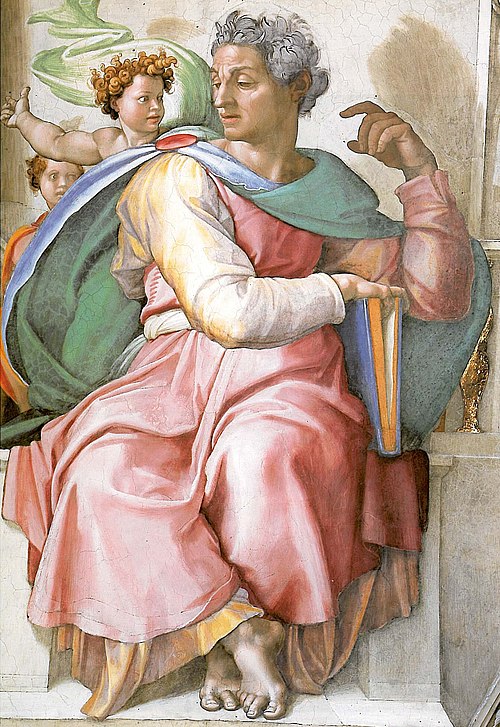
File:Jesaja (Michelangelo).jpg

Listen to Homily here:


Advent can be a difficult season to celebrate. It can be hard to know exactly what we are doing during this time. Of course, we know that Advent comes before Christmas and that we are marking off the weeks before Christmas arrives. But it can still feel difficult to wait for Christmas when, all around us, the celebrations already seem to have begun. Christmas decorations are everywhere, advertisements are everywhere, and the celebration of Christmas doesn’t seem like something we are waiting for at all.

Yet Advent is a very important season in our Church—a joyful season, a season of expectation. In Advent we are really trying to train ourselves spiritually. Because Advent begins the liturgical year, it is the Church’s way of inviting us to see the world differently. Each year we are asked to train our vision in a particular way. Advent is all about becoming aware of how Jesus Christ—Emmanuel, God-with-us—is present in our midst.

As we will hear throughout this season, the prophet Isaiah, whom we heard in the first reading today, calls the Messiah “Emmanuel,” which means God with us. At Christmas we celebrate this central mystery of our faith: the incarnation, the truth that God became a human being. And Advent is the season in which we remind ourselves that the incarnation truly happened, and that it makes a difference in our lives.

At the start of Advent each year, the Church often encourages us to read a letter from Saint Bernard of Clairvaux. He describes Advent as the season of “comings” or “arrivals.” He says that during Advent we remember several arrivals of Jesus. We remember, of course, the first coming of Jesus—his birth two thousand years ago. During Advent we also prepare ourselves for the final coming of Jesus, when Christ will return to judge the living and the dead. But Saint Bernard adds something very important. He says that during Advent we are invited to become aware of the many ways Christ arrives in our lives each day.

Because of the incarnation, Jesus is present to us daily, but we sometimes miss it. Christ, Emmanuel, arrives in the sacraments, in the Word of God, in the love we show to others, and in the love and service we receive from others. Advent reminds us that the incarnation is true, real, and transformative. Jesus is Emmanuel, and for that reason he is always present in our lives. We need this season because we often miss the presence of Emmanuel—miss the ways that Jesus comes to us. We can go through life blinded to that deeper reality, the reality of God-with-us, which is so central to our Christian faith. Advent invites us to open our eyes, to see differently, to awaken to that deeper truth.

While thinking about this, I was reminded of a movie—now almost a classic—from the late 1990s called The Truman Show. Many of you have seen it. In it, Jim Carrey plays a man who was raised since infancy on a television set. His entire life is filmed and broadcast, episode after episode, and everyone knows it except him. Everyone he meets on the set is an actor. He thinks the set is the real world. Eventually, however, he begins to see the truth. His eyes are opened, he realizes he’s been living inside a false world, and he longs to discover what is real. He experiences a change of perspective.

Advent is meant to bring about something similar in our own lives. It helps us recognize the deeper reality that Jesus is truly present among us. Like Truman, we can get caught up in our daily routine—good things like work, school, chores, and responsibilities—and we may fail to notice how Christ is present in our midst. We need this season to open our eyes to the truth of the incarnation.

Advent, then, is about seeing the world as it truly is. Because of the incarnation, the real question is not “Is Jesus present among us?” but “How is Jesus present among us?” Christ comes to us in various ways—through the sacraments, through Scripture, through the love of others—yet at times we miss him. This is why the readings at the beginning of Advent call us to be vigilant, to keep our eyes open, to stay awake. In today’s Gospel, Jesus speaks of the people in the days of Noah who did not realize that God was acting in their lives until it was too late.

At this start of Advent, then, let us pray that we may truly see how Christ is present among us—Emmanuel, always entering our lives.

There is a short stanza by the poet Elizabeth Barrett Browning, from her longer 1856 poem Aurora Leigh, that speaks beautifully about this awareness of God’s presence. In it, she refers to Moses at the burning bush—the moment when Moses recognized that God was truly present before him. She encourages us not to walk past the presence of God in our own lives.

The stanza reads:

Earth’s crammed with heaven,
And every common bush afire with God;
But only he who sees takes off his shoes.
The rest sit round it and pluck blackberries.